A busy booth does not automatically give an online buyer something worth watching. If the camera simply circles the space while the presenter reads the company name and the expert waits in the background, the viewer still has not seen the product work, heard a practical question or learned who can continue a serious evaluation in Vietnam.
A trade-show or showroom live demo should not try to capture the entire atmosphere. Each short session can answer one buying question clearly: which action is worth seeing, what the expert can prove, which local condition the distributor adds, and where an interested viewer can request material or a meeting.
Choose one product behaviour instead of filming the whole booth
A short segment can show a machine start-up, an error recovery, a mode change, an integration, a test result or the way a distributor trains users. A specific action gives the host something concrete to question and lets the buyer compare the demonstration with their own environment.
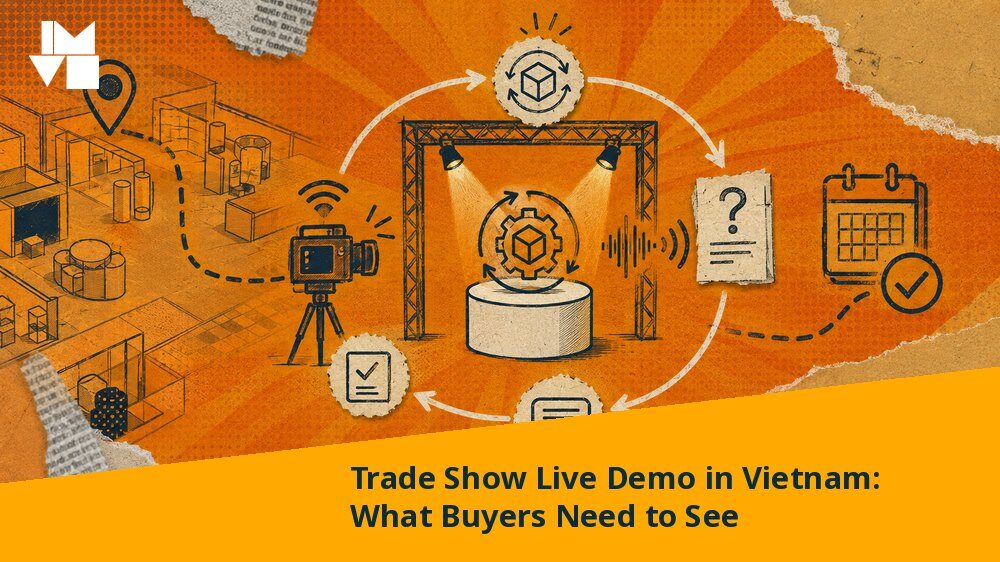
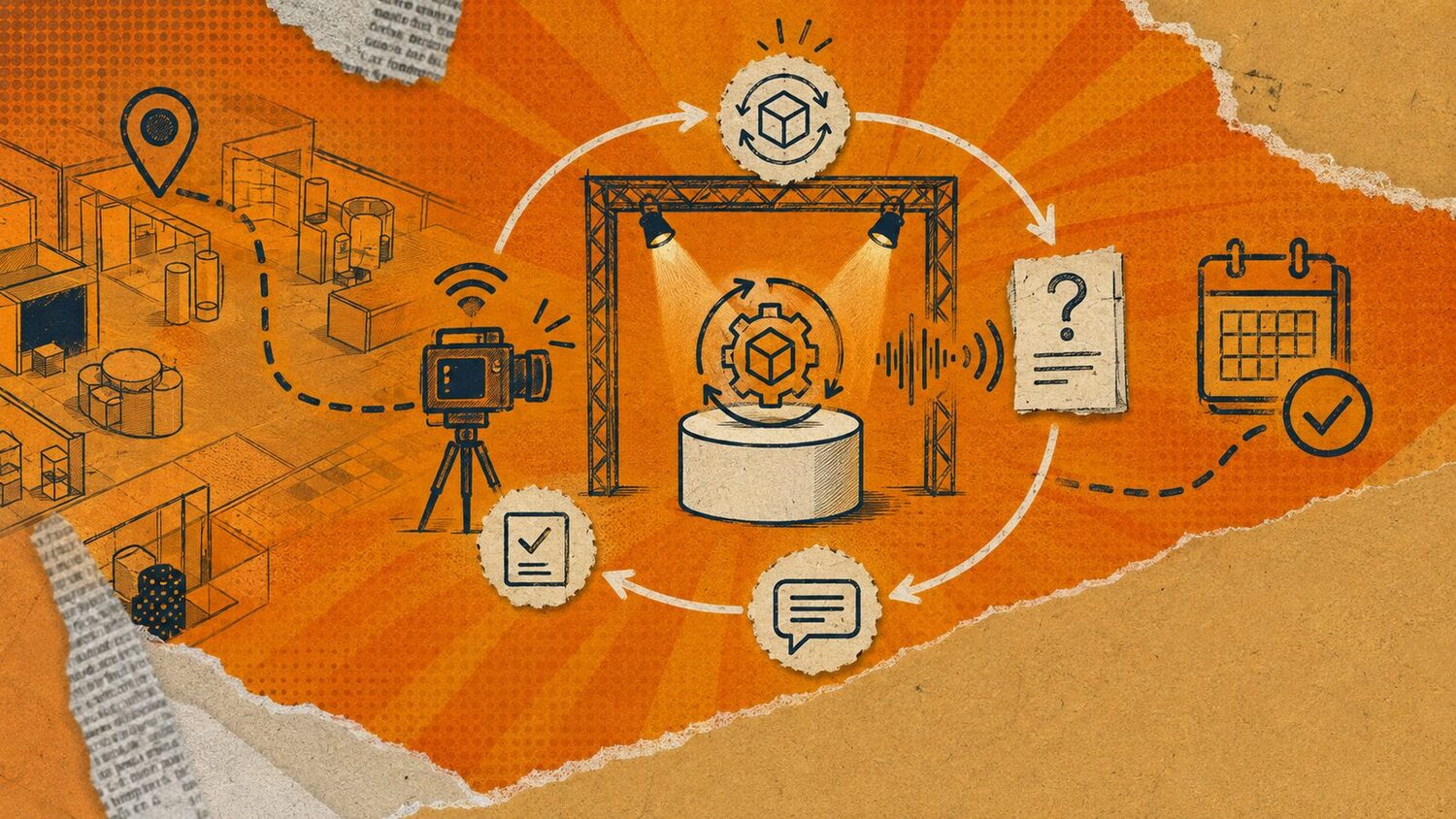
The filming diagram prioritises four points: the product in operation, a buyer question, an expert explanation and a route to register the next step. Stage, camera, sound and connectivity are supporting conditions, not the story on their own.
Design for the person at the booth and the person online
The physical visitor sees the whole product and can speak to staff after the demonstration. The online viewer sees only the chosen frame and may join halfway through. The host should restate the problem, show scale or interfaces clearly, repeat important questions and provide an action that works without visiting the venue.
A useful run can combine a two-minute problem setup, a visible product action, a question from the floor, a technical explanation and a clear invitation to request the full specification or private demo. Several focused sessions usually produce better reusable material than one long booth tour.
IMVN begins by identifying the question the brand wants a Vietnam buyer to remember after the event. The team then finds the right industry host, specialist or distributor representative, agrees the angle with them, adapts the questions for the market, prepares the working brief and confirms filming rights. During the session, useful questions can be logged so sales receives the buyer context, not only a view report.
Use B2B events as context, not borrowed proof
The official B2B Tech Asia site positions its Jakarta event around software and SaaS, speakers, exhibitors and business matching. Vietnam’s official VINASA page for Biztech 2025 announced an event in Ho Chi Minh City on 3–4 June 2025, with more than 2,000 delegates, seven sessions, 30 booths, 50 speakers and participants from more than five countries. Those numbers are organizer-announced, not an independent result audit.
A commercial roundup such as Blazer Exhibits’ B2B trade-show list can help a team discover event categories. Dates, attendance and fit should always be checked with the official organizer. An event’s scale also does not prove that one livestream generated qualified demand.
Treat noise, access and filming permission as content limits
Poor audio can make an expert’s answer unusable; weak connectivity can remove live questions; a restricted filming area can prevent the key action from appearing. These are production constraints, but they matter here because they change what content can be promised. Test the exact demo point, sound path, network fallback and approval route in advance.
Permission must cover the host, expert, distributor staff and identifiable visitors in the frame. The brand should also know whether the venue, organizer or exhibitor controls recording in a shared area. This is narrower than managing the event as a whole, but it cannot be left until the camera starts.
IMVN does not replace the booth builder, AV supplier or venue operator. Its role is to define what should be filmed, who needs to appear, which buyer questions must be answered and how the recording may be used later. Those requirements can then be passed to the event-production team as clear instructions for camera access, sound, timing and connectivity.
Capture buyer signals that sales can recognise
Assign someone to log the viewer’s organization, role, question, market and requested next action where consent and platform data allow. Questions about integration, distribution, samples, pricing structure or implementation can inform follow-up. A generic reaction or view belongs to attention reporting and should stay there.
The recording, timestamped questions and requested documents should reach the local sales or distributor owner quickly. The guide to post-livestream follow-up in Vietnam shows how to turn those moments into reusable answers without claiming every viewer as a lead.
Planning a similar creator campaign?
Share your market, category and objective. IMVN will respond with practical recommendations for the next step.
Request campaign advice →