


Korean travelers do not book on impulse. They book based on evidence.
There is an important difference between the Korean market and many international travel markets: Korean travelers research carefully before they spend. They do not simply scroll through a few attractive Instagram photos and book a room. They read long-form blogs, watch itinerary videos, compare several sources, and read comments from people who have actually had the experience. They dislike uncertainty and tend to prepare trips in detail.
That creates a clear challenge for tourism businesses: if there is not enough Korean-language content to answer the questions travelers are already searching, your brand effectively does not exist during their decision process, no matter how good the service may be.
And this is what is changing the landscape: 40% of travelers globally used AI to plan trips in 2025, and 62% are willing to use it in the near future. Korean travelers, who are digitally native and used to searching proactively, are among the early adopters. They ask AI highly specific questions: how large is that hotel pool, what is served at breakfast on that cruise, and which Ha Long cabin has the best bay view?
Public content can serve as a source for AI systems that search the web. Clear, reliable, accessible Korean-language information therefore gives a brand more opportunities to be found. More content does not automatically guarantee an AI mention, however, and AI answers can still be wrong and need checking.
Two content sources that build long-term assets
Not all content carries the same value. For the Korean market, the following two sources have the strongest long-term ROI because they serve both real readers and AI systems:
Source 1: Owned channels — especially Naver Blog
Naver is the dominant search engine in Korea with more than 70% market share. While Google prioritizes backlinks and domain authority, Naver favors new, detailed, and frequently updated content. This gives small and medium-sized tourism businesses an important advantage when building a content library.
Tourism businesses should build their own Naver Blog and publish consistently. The content does not need to look highly polished; detail and practicality matter more:
- Clear descriptions of facilities.
- Real photos of rooms and spaces.
- Information about food, services, and how to get there.
These details help travelers research and can also serve as references for AI systems that search for information to answer Korean-language travel questions.
A blog post from 2–3 years ago can still be useful if its information remains accurate and relevant to a traveler’s question. That does not mean AI ignores freshness. Prices, facilities, itineraries, and transport details need review and updates. Long-term value comes from maintaining a reliable content library, not simply from having published it.
Source 2: Content from Korean KOLs and KOCs

Korean KOLs have one notable characteristic: they often write and film in great detail. A Naver Blog travel review commonly runs 2,000–3,000 words, includes real photos, day-by-day itineraries, and specific descriptions of the experience. YouTube videos often walk through the day hour by hour. This is not simply advertising. It is real-world evidence that Korean travelers may trust more than a brochure.
And importantly, the KOL does not need millions of followers. A KOL with 30,000 followers who writes a detailed 3,000-word review can create more SEO and AI value than a mega-influencer who posts a photo with no caption. The content can keep appearing in Naver searches and being retrieved by AI for months or even years after publication. This is one reason 73% of global brands now prioritize micro- and mid-tier creators.
The accumulation principle is simple: five KOL blog posts + a consistently updated owned Naver channel = a content library that grows over time. Each additional post does not simply add one more asset; it increases the total “surface area” of the brand across Korean-language search results and the information AI can synthesize.
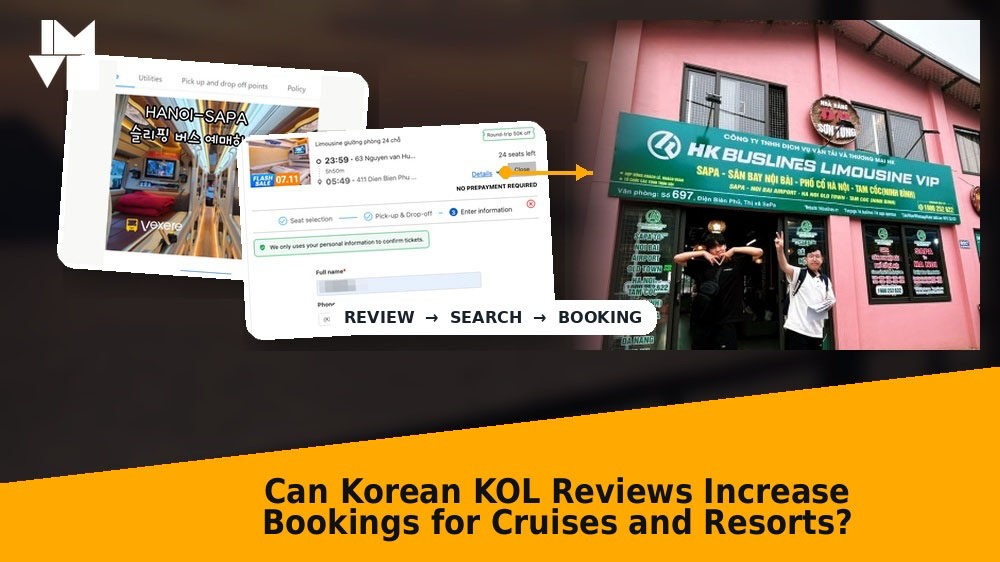
When assessing this investment, distinguish awareness, active research, and an actual booking. The article on measuring how Korean KOL reviews contribute to bookings examines those different outcomes.
The share of Koreans traveling independently increased from 77% in 2019 to 83% in 2025. Nearly 30% of Koreans have traveled solo at least once. Small groups of 2–4 people increasingly book combinations of flights, rooms, and activities online without using an agency.
According to Daxue Consulting, this group is heavily influenced by YouTube and travel influencers rather than advertising or agency catalogs. Influencer content is the only channel that reaches this audience effectively. Visa/Vietdata data from 2024 also shows that Korean travelers’ accommodation spending in Vietnam increased 60% in the first half of 2024, reflecting a shift from low-cost group tours toward higher-quality, self-booked holidays.
For younger, independent travelers in small groups, spending is rising and the traditional agency channel is less relevant. The only way to reach them is through content on the platforms they already use: YouTube, Instagram, and Naver Blog.
One practical approach is to have several Korean KOLs travel together and produce both attention-generating video and sufficiently detailed Naver content that travelers can find again later. The cost is shared among brands on the same trip. Content is distributed across Naver Blog, YouTube, and Instagram instead of disappearing after one isolated post.
That is how the Korean Co-op Trip is designed: not simply to buy views, but to leave behind content that Korean travelers can still find when they begin researching.
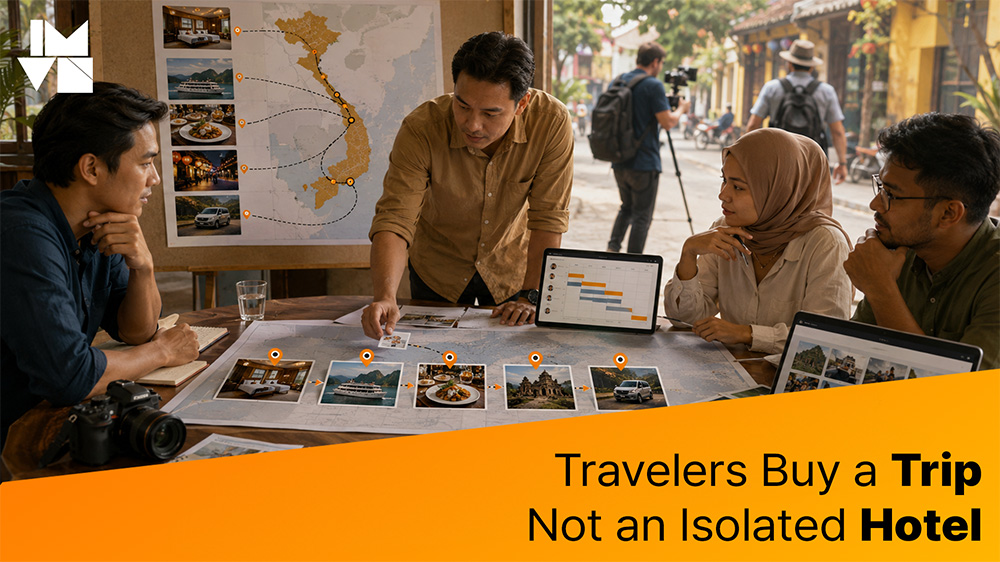
The article on why standalone promotion is no longer enough explains how brands can coordinate around one journey, from itinerary searches to the role of each service along the route.
References: Customer Alliance — AI Hotel Recommendations (2025) · Expedia Group Traveler Value Index (2025) · Phocuswright AI Travel Survey (2025) · Alpic AI — Travel’s New Front Door (2026) · Daxue Consulting — Korean Wellness Tourism (2025) · Visa/Vietdata Vietnam Spending Report H1 2024 · Inquivix Korean Digital Marketing Research · Korea Tourism Organization (2025)
Planning a similar creator campaign?
Share your market, category and objective. IMVN will respond with practical recommendations for the next step.
Request campaign advice →