



A hashtag appearing in thousands of posts does not mean a campaign has succeeded. When a marketing team clicks a tag and finds a large stream of content, the only certain fact is that those posts use the same label. The team still has to examine who is taking part, what people are saying and whether the conversation relates to the brand’s objective.
A useful hashtag strategy gives each tag a clear job. One tag may collect campaign content, another may carry the message, and another may invite the community to tell a story. If a single phrase is expected to trend, measure sales and explain the full idea, the team may end up with a clever line that nobody knows how to use.
Hashtags organise conversation; they do not replace measurement
A dedicated tag helps the marketing team find related posts without searching every account. When celebrities, influencers and other users apply the same phrase, the brand can observe how much public content appears, how the message is repeated and which reactions stand out. This is especially useful when a campaign runs across many personal pages.
Clicking the hashtag, however, shows only the public material returned by the platform. It does not automatically reveal unique reach, overlap between audiences, participant sentiment or an effect on purchasing behaviour. A critical post can sit beside a supportive one. Post counts and interactions therefore need to be read alongside the comments, channel data and the original campaign objective.
A tag can also aid recognition. A short phrase that is closely tied to the campaign idea may help viewers identify content from the same activity. If it is easy enough for people to add to their own posts, it can become a meeting point for community contributions. Participation still needs a reason: a good question, a suitable challenge or a story people genuinely want to tell.
Before naming the tag, decide what people will do with it
Teams can take two broad routes. The first is to join a hashtag that is already attracting attention. This works only when the existing conversation is genuinely relevant to the brand. Forcing a sales message into an unrelated trend may produce visibility, but it can also provoke a negative response.
The second route is to create a campaign tag. Before choosing the wording, the brand should complete a simple sentence: “People use this hashtag when they…” They might define what home means to them, accept a challenge, express a way of living or post an experience with a product. If the marketing team cannot complete that sentence, it may have a slogan rather than a device for participation.
A good campaign hashtag should be short enough to type, difficult to misread and unlikely to acquire an unintended meaning when the words are joined. Spaces and punctuation do not work inside a hashtag, so capital letters can help readers separate words. Before launch, the team should search for the phrase on each platform, check whether another community already uses it and ask people outside the project to read it.
There is no universal number that suits every post. A clear campaign tag may sit beside a small number of relevant topic tags when the platform and content call for them, but a long unrelated list can dilute the message. Each hashtag should earn its place by performing a defined job.
Three campaigns show that a hashtag needs a story people can join
Fami used #nhàlànơi to invite personal definitions of home
In 2015, Fami introduced #nhàlànơi for Vietnamese Family Day. More than 30 celebrities shared their own answers to the question “What is home?”, while a campaign song connected the stories through a common theme. More than 22,000 people joined the activity. Many used the hashtag to tell personal stories on their own pages rather than simply repeat an advertising line.

The useful lesson was not only that the phrase was memorable. The Vietnamese wording left a sentence open: home is where… Each person could complete it with a memory, a relationship or a private moment. Celebrities opened the conversation with their stories; the community was given room to add its own.
Samsung made #S7tháchbạn an invitation to take a challenge
For the Galaxy S7 launch, Samsung introduced the message “S7 dares you to break limits” with influencers including An Nguy, Ninh Dương Lan Ngọc and Trần Quốc Anh. #S7tháchbạn appeared across their content. Figures recorded for the campaign placed interactions on individual influencer posts between approximately 2,000 and 100,000.
The word “challenge” suggested what the audience could do: accept a prompt or watch how an influencer responded to it. The wide variation in interactions also showed that a shared tag did not make every post perform equally. The participant, the specific idea and the way content was distributed still shaped the response.
Budweiser kept its message inside #samesameBUDdifferent
For its 140th anniversary, Budweiser used a “Live Differently” message and a video featuring MC Phan Anh, Tóc Tiên and Kim Lý. The video received more than 2.5 million views in one week. #samesameBUDdifferent played on the idea of being alike yet different, while placing BUD inside the phrase to connect community content to the brand.
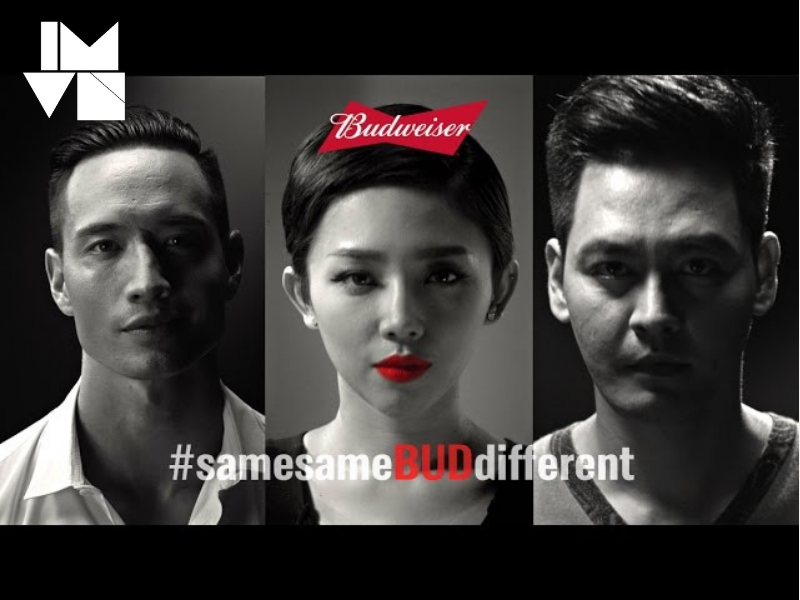
The hashtag supported campaign recognition, but the video, participants and message gave people a reason to watch and share. Viewed on its own, the phrase could not be credited with producing all 2.5 million views.
Influencers need to understand how to use the hashtag, not merely copy it
When several influencers take part, a common mistake is to send everyone the same caption and ask them to place the tag at the end. That creates surface consistency but can make every post sound like advertising. Followers notice when a story does not belong to the person telling it.
The brief should explain what the hashtag represents, the range of stories participants can tell, the information that must remain accurate and the action the brand wants to encourage. One person may tell a family story; another may complete a challenge or answer community questions. The tag holds the work inside one campaign, while the angle still needs to fit each person’s voice.
This is also why content guidance for KOLs must balance brand information with the participant’s expression. These Instagram tips for building a brand through social content offer a related view of how platform habits and content choices shape the way a message is received.
Before posting, every influencer should know the exact spelling, capitalisation and placement of the hashtag, and which posts require it. If the campaign offers a prize or asks the community to submit content, the rules must state what qualifies. A spelling error or unplanned variation can leave a post outside the set the marketing team is monitoring.
IMVN turns the hashtag idea into instructions people can actually use
IMVN can begin with the campaign objective: does the brand need to collect content, invite people into a story or make related posts recognisable? From there, IMVN can review the wording, check for likely misreadings and recommend how the hashtag should appear in the influencer brief.
When selecting participants, IMVN can examine the subjects they usually discuss, the way their communities respond and whether each person can turn the shared idea into a credible story. Once the list is agreed, every influencer needs the required information, the room for personal expression, the correct hashtag form and clear handover dates. The brand remains responsible for approving the message, product facts, participation rules and legal requirements.
During delivery, IMVN can coordinate content rounds, check hashtag use and consolidate public posts with the agreed channel figures. The marketing team should receive post volume, interaction figures and conversation themes as separate lines; where the campaign uses links, codes or a landing page, those signals should also be reviewed separately. This shows how well the hashtag collected the conversation without assigning it results that the available evidence cannot prove.
Planning a similar creator campaign?
Share your market, category and objective. IMVN will respond with practical recommendations for the next step.
Request campaign advice →