

A game publisher can buy banners, run ads and announce a launch date, yet those formats still struggle to show what playing the game actually feels like. Players want to see how someone familiar handles the game, reacts to an unexpected moment and answers questions that a scripted advertisement usually leaves out.
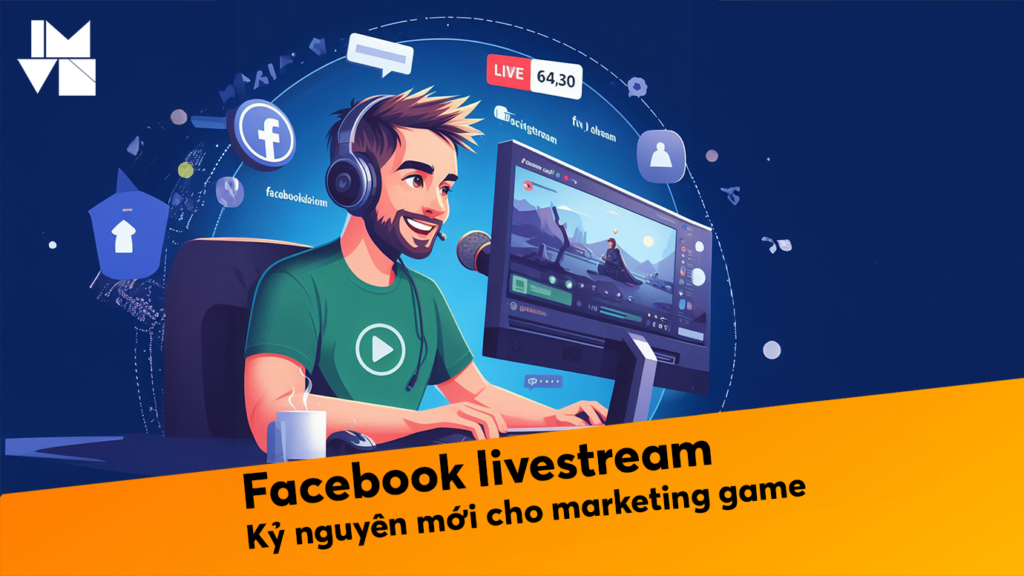
That is why publishers began paying closer attention to livestreaming. When a stream features a gamer, streamer or public figure already known to the community, the game is no longer presented as a one-way message. Viewers can comment, ask questions and watch someone they trust engage with the product in real time.
Game advertising is difficult when players need to see the experience
Games are easier to understand when people can see them being played. A polished image may attract attention, but it cannot show pacing, controls, competition or the feeling of joining a community. Online advertising has also become more crowded. Banners and pop-ups are easier to ignore, while rising costs on Google and Facebook do not necessarily make it easier to reach people who are likely to play.
Publishers have therefore looked for formats that sit closer to the gaming community. Before Facebook Live, many worked with gamers such as QTV, Nhật Hoa Xuka and Misthy to promote new releases on Talktv.vn or YouTube. Those broadcasts could show gameplay and the personality of the host, but many channels attracted only a few hundred to one or two thousand views for each uploaded video.
The challenge was not simply finding somewhere to stream. A publisher still had to answer three questions: who could make the community stop and watch, what should happen during the broadcast to invite participation, and what evidence would show that viewers were discussing the game rather than merely watching a familiar face.
Facebook Live brought KOLs and their communities into the same conversation
When Facebook introduced live video in 2016, a broadcast could appear directly in followers’ feeds and receive comments while it was still running. For game marketers, the important change was not only the broadcasting technology. A KOL could announce the session on a personal page, bring an existing community into the stream and respond when viewers asked about characters, gameplay or the launch.
The format combined three elements that were often separated: video demonstration, the existing relationship between a KOL and the audience, and live conversation. If the host simply read advertising copy, viewers could still leave. When the host actually played, shared experience or showed the work behind a launch, there was a stronger reason to stay.
The person with the largest following was not automatically the best choice. A singer could create broad awareness around a launch, while a gamer might be better placed to explain gameplay or answer detailed questions. Publishers therefore needed to define the job of the guest before choosing a name. This guide to choosing a social media channel for the intended audience offers another way to separate broad reach from community fit.
Two broadcasts show how different KOLs performed different jobs
Đan Trường attracted attention before the launch of Võ Lâm Truyền Kỳ Mobile
Before the mobile version of Võ Lâm Truyền Kỳ officially launched, Vinagame invited singer Đan Trường to serve as its representative. He shared a live behind-the-scenes video from a promotional photoshoot on his personal page. Figures recorded for the campaign showed nearly 400,000 views and tens of thousands of interactions; about 40% of the discussion referred to Võ Lâm Truyền Kỳ.
The photoshoot gave the broadcast a natural reason to exist. Viewers were not merely told that a game was coming; they could see its representative taking part in a real campaign activity. Đan Trường’s role leaned toward broad attention and putting the game’s name into conversation before release.
Nhật Hoa Xuka took the Cửu Âm Chân Kinh conversation deeper
Nhật Hoa Xuka was a popular gamer with approximately 600,000 followers on her personal page. Her livestream about Cửu Âm Chân Kinh attracted more than 100,000 interactions, and campaign figures indicated that about 90% of the discussion referred directly to the game.
The figures illustrate a different role. People followed a gamer not only because she was well known, but because they wanted to see how she played, hear her comments and talk with others who shared the interest. When a KOL’s established subject was close to the product, the conversation could stay more tightly focused on the game. High interaction alone, however, did not prove downloads or revenue. The publisher still needed to track what viewers did after the stream.
A strong livestream must be prepared as a programme, not a post
Before going live, the marketing team and KOL needed to agree on the objective, running time, required information and the moments where the guest could react naturally. If the game introduced a new feature, the KOL needed enough time to try it rather than search for facts while broadcasting. If a session included backstage access or other guests, each person’s responsibility also had to be clear.
Likely questions could be prepared in advance, but every answer should not be scripted. The publisher owned product facts, launch timing and any information that could not be disclosed. The KOL owned the delivery, personal experience and relationship with the community. Leaving sensible room between those responsibilities helped a session remain accurate without sounding memorised.
The parties also needed to agree on the recording. Would the video remain on the KOL’s page? Could the brand cut short clips and repost them? Where could the KOL’s name and image be used? These permissions were easier to settle before the broadcast. Reporting should also go beyond views and likes. Concurrent viewers, watch time, questions about the game, visits to a download page and tracked codes could help the publisher distinguish attention from action.
IMVN connects selection, content coordination and the final handover
Once a publisher knew which players it needed to reach, IMVN could help connect with and select suitable KOLs. The shortlist would not rely only on follower count. It could also consider which games each person was known for, how the community usually responded and whether the person could carry a live programme.
Starting from the selected guest, IMVN could work with the marketing team on the running structure, identify the sections that deserved attention, prepare useful questions and coordinate so the KOL understood the product without losing a natural voice. IMVN could also help clarify how the recording might be reused and which signals should be tracked, rather than leaving the team to gather disconnected figures afterwards.
The publisher’s marketing team should receive a KOL shortlist with reasons for each choice, a content structure, clear responsibilities and a practical way to read the result. The publisher remained responsible for approving game information, running the channel, technical production and budget decisions. IMVN handled the agreed selection, coordination and tracking work so the livestream had a defined job beyond producing a large view count.
Planning a similar creator campaign?
Share your market, category and objective. IMVN will respond with practical recommendations for the next step.
Request campaign advice →