

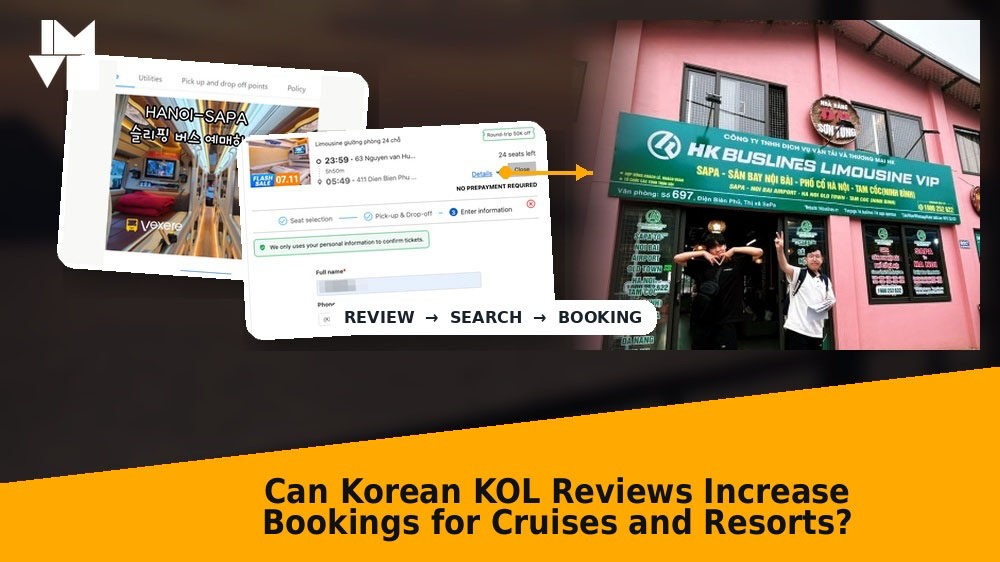
If a campaign generates 200,000 views but the business does not know how many bookings came from it, should a tourism company keep investing?
That is a reasonable question. The direct answer is that no one can guarantee a fixed number of bookings simply because a KOL was invited to review the product.
Content with a lot of views does not necessarily generate an immediate sale. Conversely, a post that never becomes highly visible may still be found months later and help a traveler make a decision. So asking only “How many bookings did this post generate?” can be too narrow. The fuller question is: how did the content help Korean travelers become aware of the brand, find it again, and feel confident enough to book?
Try searching your brand name on Naver
Open Naver and search for the name of your cruise or resort together with the word 리뷰, meaning “review.” What appears? Is there Korean-language content from people who actually experienced the product? Are there photos of the cabin, meals, and itinerary? Or do you mainly see the official website, booking pages, and a few older English posts?
Vietnam received 4.6 million Korean visitors in 2024. In the first two months of 2025 alone, the figure exceeded 885,000. The market is large. The more useful question is: how many of those travelers have ever been able to find your brand name in Korean?
Travelers do not only search broadly for “Ha Long” or “Phu Quoc.” Once they begin considering options, they search for the exact cruise or resort name. If there is almost nothing to read at that stage, the issue may not be the product. Travelers may simply lack enough evidence to feel comfortable choosing it. That is a gap KOL content can help fill.
Bookings rarely happen immediately after one view
Korean travelers rarely book simply because they have just watched one video. For higher-value travel products, they often spend 2 to 6 weeks researching:
- Read 5–10 Korean-language blog posts, not broad introductions but detailed accounts of meals and each stage of the experience.
- Watch 3–5 videos to check the real room, food, and itinerary.
- Compare prices on Naver, Kakao, and Korean booking platforms.
- Ask travel communities on KakaoTalk before making the final decision.
According to a survey of Korean traveler behavior, 70% consult social media when planning, above the global average. 38.4% read travel blogs for practical information, and 23.9% say social media directly influences their booking decisions.
A booking is usually not the result of one video alone. It comes after multiple moments of exposure and verification. A tracking system can record someone who clicks a link and books immediately, but it is much harder to identify the person who watches a video today, reads a Naver post two weeks later, and then books through an agency. The content may have played a role even when that contribution is not fully recorded.
Where does KOL content contribute?
Travelers need to know the brand exists before they can search for it
Short-form social video mainly serves this purpose. A traveler may never have heard of your cruise or resort. A video from someone they follow gives them the first reason to notice it.
The value at this stage is not necessarily an immediate sale. The value is getting the brand name onto the list of options the traveler will investigate further. Without that first step, it is difficult for people to search for a name they have never encountered.
Once travelers know the name, what is there for them to read?
This is where Naver Blog posts and longer experience videos become useful. Travelers want to see details that official sales pages often cannot fully show: whether the room really looks like the photos, whether the food suits Korean guests, and whether the itinerary feels too tiring.
A strong review does more than say the service was “great.” It takes the traveler through the full journey in a language and point of view that feel familiar.
A brand’s online presence works like an information shelf. If a traveler searches “cruise name + review” and finds only the official website, booking pages, and English content, that shelf is almost empty. After several campaigns, the shelf may include Naver posts, experience videos, and images tied clearly to the brand name. The business is not only buying posts; it is adding more points where the brand can be found while travelers are researching.
One individual post may not be enough. But when travelers find consistent content from several different sources, trust usually increases.
Reduce the feeling that “this place is not for people like me”
One Korean KOL once shared that she was the only Korean guest on a luxury Ha Long cruise, while most of the other passengers were European or American.
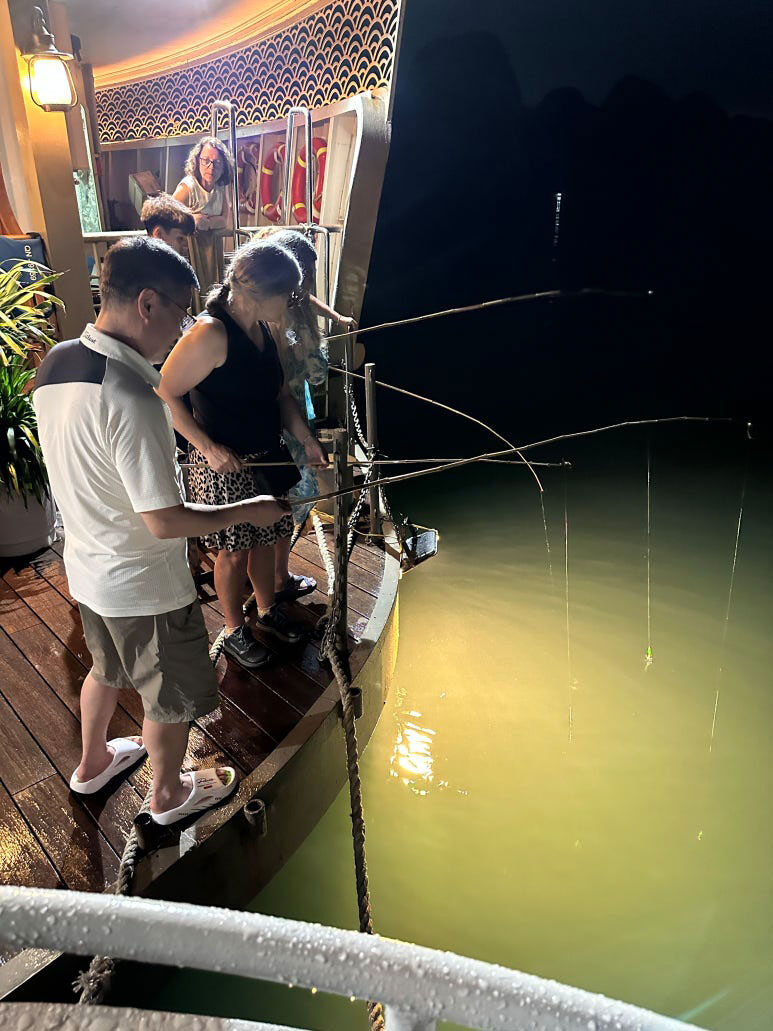
The service can still be excellent, but if all the imagery shows Western travelers, most content is in English, and there are almost no reviews from Koreans, prospective guests may still wonder: is this place used to serving Korean travelers? Will the food, activities, and communication suit them?
Content from one Korean traveler does not immediately change the guest mix on board. But it creates one very clear piece of evidence:
A Korean traveler has actually been here, experienced the product, and documented the full journey.
People see someone like themselves having the experience. The sense of unfamiliarity decreases. The signal is simple: this experience can work for Korean travelers.
For a brand that wants to grow in the Korean market, KOL content can serve as an initial layer of proof before there are enough organic Korean guest reviews.
The sales team can use it immediately in consultations
When a traveler is considering a purchase, the sales team or an agency can send a Naver post, an experience video, or a Korean-language itinerary directly. Compared with a set of brand-produced photos, content from someone who actually experienced the product often answers more practical questions.
At this point, the content is no longer a one-time post. It becomes sales-support material. The content does not close the sale instead of the salesperson, but the consultation becomes easier because the traveler has more information and fewer uncertainties.
It remains useful after the campaign ends
Short videos usually create attention for a limited period. A detailed Naver Blog post may continue appearing in search results 18–24 months after publication. A well-optimized YouTube video may remain among results related to Ha Long cruises for 2–3 years.
When advertising stops, impressions usually stop with it. A review, however, may still be found through search, resent by staff, used by an agency during consultation, or shared by travelers in a community. If there is almost no Korean-language content about the brand, the chance of appearing while travelers research independently will be lower.
Not every KOL delivers the same value
You do not need an account with millions of followers. Many brands prefer creators with moderate audiences that match the travel segment because their content is often more detailed and trusted.
73% of global brands prioritize micro- and mid-tier creators (30,000–200,000 followers) because engagement is higher and the content is seen as more trustworthy. Korean KOLs in this range also tend to write in detail, which is exactly what Korean travelers need when making a decision.
When selecting a KOL, look at the follower profile, the depth of the review, whether the brand name is clearly visible, whether the content can still be found after publication, and whether the brand has the right to reuse it in sales activity.
Short video works well when the goal is attention. Naver posts or long-form video are better when travelers need to research. If direct bookings need to be measured, a dedicated link, promo code, or campaign landing page should be prepared from the beginning.
Choosing a KOL also means deciding which experience is worth documenting. The article on differentiating a Ha Long cruise through its experience examines the preparation that comes before creators film or write.
How should the impact be measured?
Views should not be the only metric. But it is also wrong to assume that all influence is impossible to measure.
- Directly attributed bookings. Use a dedicated booking link, a unique promo code, a campaign-specific landing page, or a “How did you hear about us?” question in the form. This is the most visible layer, but it only captures travelers who follow the tracking path that was set up.
- Travelers start researching proactively. Look at searches for the brand name on Naver, visits to Korean-language pages, review views coming from search, and messages from Korean travelers asking about price or how to book. These are not bookings yet, but they show that the traveler has moved from “happened to see it” to “actively researching it.”
- Signals from sales and agencies. Travelers send the KOL post back and ask about the exact product. They mention the KOL when contacting the business. They ask about details that appeared only in the review. Korean agencies begin receiving requests for the brand by name. These signals are close to booking even when the system cannot attribute revenue to a specific post.
When does this content support booking more effectively?
The opportunity is stronger when the product is good enough, the KOL matches the audience, the content is specific, the brand name is clear, there is both attention-generating content and deeper research content, the sales team knows how to reuse it, and the booking channel is convenient for Korean travelers. The expectation should not rest on one post alone.
Bookings are difficult if people finish the content without remembering the name, cannot find further information, or do not know where to book. Good content is only one part of the equation. Price, product, distribution, and the booking process still determine the final outcome.
So, does it actually generate bookings?
There can be direct bookings that are measurable through a link or promo code. There can also be cases where the content does not generate an immediate sale but makes travelers aware of the brand, prompts them to search, and contributes to a choice several weeks later. That contribution is real even if it is not always fully recorded.
It would not be objective to claim that a campaign is guaranteed to generate a specific number of bookings. It would also be incomplete to say content has no value simply because people do not book immediately after watching it.
For cruises or resorts trying to reach Korean travelers, the more useful question may not be only “How many bookings will this KOL bring?” but:
When Korean travelers search for our brand name, do they have enough information and enough reason to trust us and book?
If the answer today is “not yet,” content from Koreans who have actually experienced the product is one practical way to begin filling that gap.
How large that gap is can be assessed by each business through search results, customer questions, and its own sales data.
To keep reviews useful after a campaign, place them within a long-term content strategy for the Korean market, combining creator content with channels the brand manages itself.
If the gap exists on the Hanoi – Ha Long route, one practical approach is to have several Korean KOLs review a complete journey rather than produce isolated posts. When the content follows a real itinerary, the brand becomes part of the trip itself, exactly where travelers need information to make a decision.
Planning a similar creator campaign?
Share your market, category and objective. IMVN will respond with practical recommendations for the next step.
Request campaign advice →