

A playbook for hospitality, tourism, retail and experience brands in Vietnam serving international, regional and Philippines-English audiences.
Infinity pools, rooftop bars, room upgrades and elaborate breakfasts are valuable, but they are increasingly common. Once competitors offer similar amenities, a feature becomes an entry requirement rather than a memorable reason to choose.
The strategic question is not, “What else can we add?” It is, “What moment will a guest want to retell, and will that story clearly belong to our brand?” Shareable experience design connects product, emotion, service operations and content—not just interior decoration.
When amenities become standard, emotion becomes the advantage
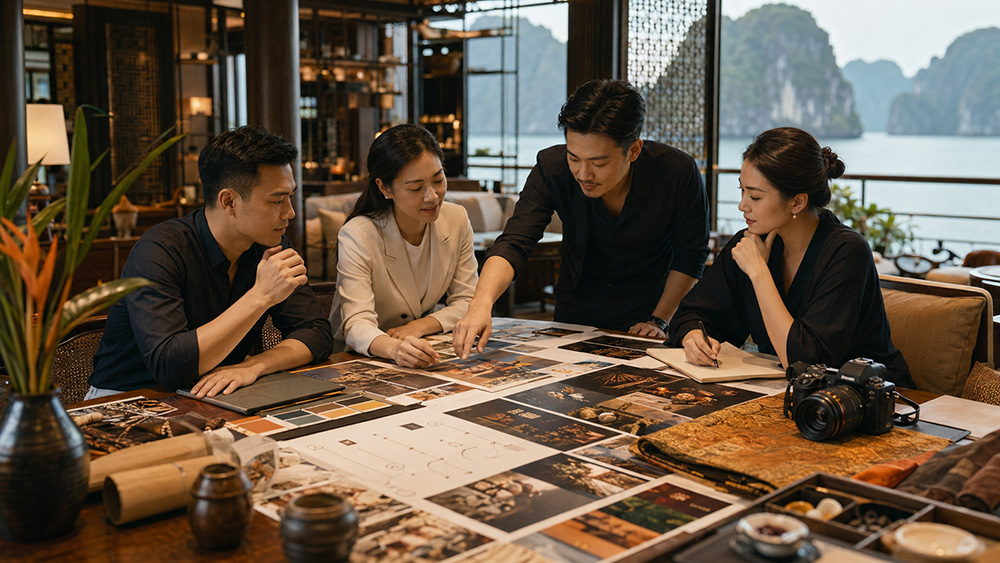
Amenities are easy to list and compare. Emotion explains why a traveller prefers one experience over another. A heritage cruise might own the feeling of stepping into another era. An urban hotel might own insider access to the city. A resort might own an unhurried sense of recovery.
| Layer | Guest question | Content effect |
|---|---|---|
| Amenity | What does it have? | Easy to demonstrate, easy to copy |
| Experience | What will I do and feel? | Creates a story and evidence |
| Identity | Why can only this brand deliver that feeling? | Builds memory and named preference |
Without a chosen emotional territory, creators fill the gap themselves. The output is often attractive but generic: room, breakfast, pool, sunset and a caption that could describe ten competitors. Creative direction must therefore start before creator selection.
Choose an emotional territory operations can deliver
An emotional territory is not a slogan. It is a promise that the guest journey repeatedly proves. Test it against four questions: Is it grounded in real assets? Is it distinctive? Is it relevant to the target market? Can the operation deliver it consistently?
- Heritage immersion: architecture, rituals, local craft and service create entry into another world.
- Attainable luxury: the guest feels exceptionally cared for within an accessible time and price frame.
- Healing and slowness: fewer decisions, lower noise and protected personal space.
- Local access: guests encounter people, food or places that mass itineraries rarely unlock.
- Playful discovery: surprise, participation and light challenge create natural social energy.
For Philippines-English audiences, group celebration, friendship, food, music and easy mobile communication may shape the experience. Korean, Thai and Indonesian guests will bring different expectations around detail, pace, food context, language support and social formats. The core identity remains stable while the delivery is cooked.
A signature moment must be designed as a product
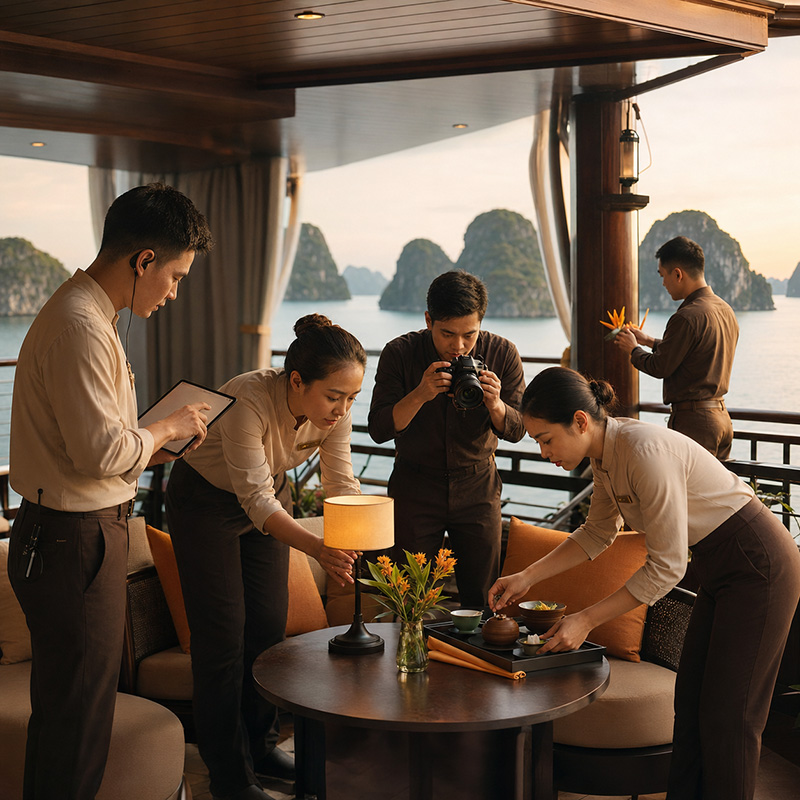
A signature moment is not a decorative photo corner. It has six linked components: setting, action, emotion, timing, captureability and a recognisable brand cue.
| Component | Design question |
|---|---|
| Setting | What environment can this brand credibly own? |
| Action | What does the guest actually do? |
| Emotion | Should the moment create pride, calm, surprise or connection? |
| Timing | When do light, sequence and duration work best? |
| Captureability | Can guests record it without damaging the experience? |
| Brand cue | What makes the content identifiable without a large logo? |
A heritage costume experience, for example, becomes a product only when sizing, styling, changing space, cultural explanation, photography timing, consent and delivery are designed. The concept is the visible tip; service choreography carries the weight.
Build the service choreography behind the moment
Guests should experience a smooth sequence. Behind it, the operation needs triggers, timing, ownership and fallback routes. Who introduces the moment? Who checks weather or availability? Who resets props? Who helps a guest who opts out?
- Define the start trigger and maximum duration.
- Write a short, natural service script with an opt-out path.
- Plan safety, hygiene, sizes, inventory and replenishment.
- Protect other guests from production disruption.
- Create consent and image-right procedures.
- Set a delivery SLA for photos or edited clips.
- Train staff to express the brand emotion rather than recite a script.
Creator-ready should never mean creator-only
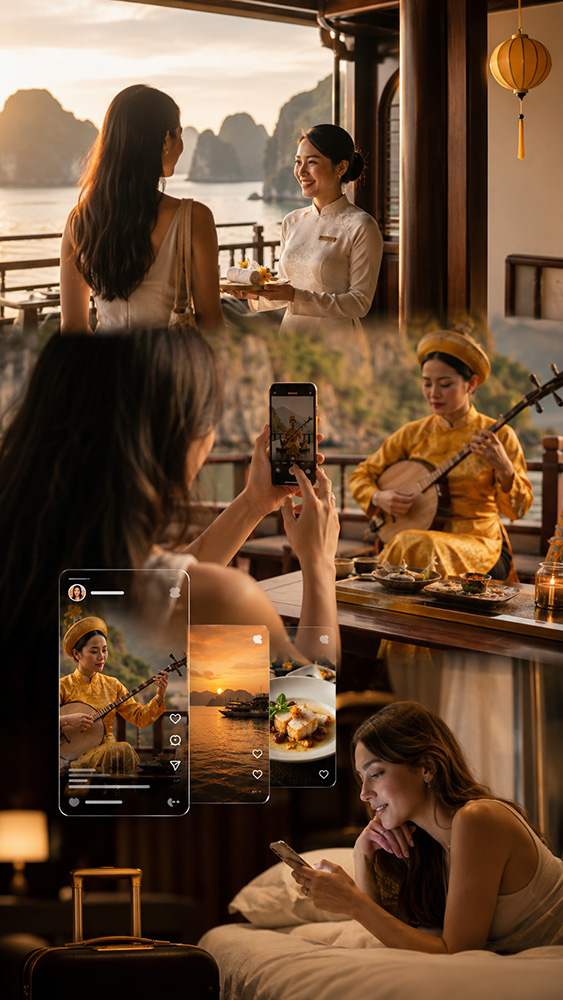
An experience should be valuable even when no creator is present. If influencers receive a completely different product, the content establishes an expectation ordinary guests cannot receive. That gap creates negative reviews and weakens trust.
The better model is a strong core experience for every guest, plus a production layer for creators: scheduled access, shot opportunities, equipment zones, a local fixer and usage-right documentation. The promise remains the same.
| Layer | Every guest | Creator or production team |
|---|---|---|
| Experience | Receives the signature moment and service standard | Receives coordinated capture time |
| Content | Can use a content kit or photo support | Works with brief, shot map and rights |
| Operations | Is not disrupted by filming | Has schedule, fixer and equipment area |
| Expectation | Can receive what social content shows | Does not exaggerate unavailable service |
Cook the experience for each market
Localization does not require rebuilding the product for every nationality. Preserve the emotional territory and signature moment, then adapt language, food information, social mechanics, pace and support.
- Korea: detailed schedules, polished capture, explanatory long-form evidence and clear service standards.
- Thailand: social energy, food moments, group interaction and short-form-friendly pacing.
- Indonesia: halal context, ingredient transparency, prayer and group logistics, Bahasa/English support.
- Philippines: English-first communication, group celebration, shareable friendship moments and fast mobile contact.
Turn one experience into a content asset system
| Asset | Role | Requirement |
|---|---|---|
| Creator post | Discovery and social proof | Outcome-led brief without forced wording |
| Guest UGC | Authenticity and volume | Easy capture, simple handle, clear consent |
| Brand master asset | Website, ads and sales | Production quality and usage rights |
| Long-form evidence | Search and consideration | Detail, chapters, FAQ and market context |
| Partner kit | Travel trade and B2B sales | Approved images, naming and product facts |
Usage rights should be defined before the campaign. The brand needs to know which assets can be used in paid media, websites, sales decks or partner channels, for how long and in which markets.
Measure experience quality and content value together
- Participation and completion of the signature moment.
- Satisfaction at the relevant service touchpoint.
- UGC volume with recognisable brand cues.
- Saves, shares and comments showing purchase questions.
- Brand search and qualified inquiries.
- Staff time, production cost and operational incidents.
- Percentage of assets that can be legally reused.
A high posting volume cannot compensate for an awkward guest experience. Likewise, a delightful moment that never carries a brand cue may create destination value without creating commercial value for the operator.
Run a six-week prototype before standardising
- Audit existing behaviour: find where guests already take photos and where the journey creates friction.
- Select one emotional territory: avoid promising five different identities.
- Prototype one signature moment: small, safe, distinctive and brand-linked.
- Test with real guests and smaller creators: observe behaviour rather than collecting only opinions.
- Refine choreography: timing, staff, props, consent and delivery.
- Review marketing and operations together: keep, redesign or stop before scaling.
Related resources include international KOL strategy for Vietnam tourism, three essentials for international influencer campaigns, destination promotion case study and YouTube for Vietnam tourism.
How IMVN supports the operating model
IMVN helps brands in Vietnam define emotional territory, cook the experience for priority markets, build creator briefs, coordinate production, design service flow, manage content rights and connect the resulting assets to demand generation. The aim is an experience worth sharing because it is genuinely differentiated—not a camera trick applied to a generic product.
Reference
For broader cruise and experience context, see the CLIA State of the Cruise Industry Report 2025. Any benchmark should be validated against the brand’s segment, market and operating data.
Planning a similar creator campaign?
Share your market, category and objective. IMVN will respond with practical recommendations for the next step.
Request campaign advice →