


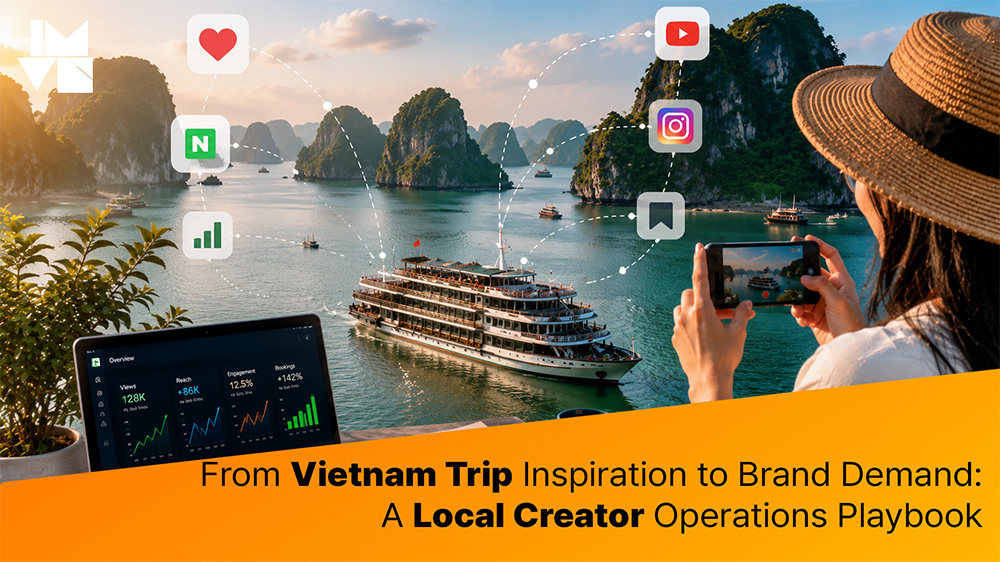
A practical playbook for international, regional and Philippines-based brands, agencies and creators entering Vietnam.
Vietnam may already be on the traveller’s shortlist, but that does not mean a specific hotel, cruise, attraction or retail experience is on it. A destination can gain millions of views while individual brands remain interchangeable at the moment of purchase.
For a market-entry campaign, the job of creator marketing is therefore not only to generate attention. It must help the audience remember a name, understand a reason to choose it, know how to buy it, and find enough evidence to reduce the perceived risk of booking in another country.
Destination interest does not automatically become brand demand
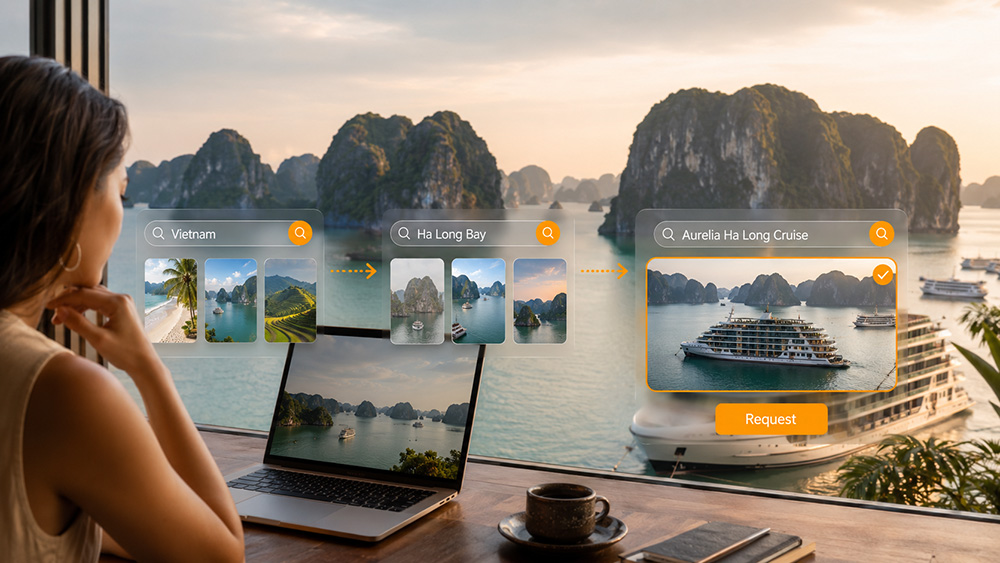
Destination demand answers, “Should I visit Vietnam?” Brand demand answers, “Which operator, hotel, experience or product should I select once I go?” The second question sits closer to revenue and requires more than an attractive reel.
| Demand layer | Typical signal | Commercial implication |
|---|---|---|
| Destination | Views and searches for Vietnam, Hanoi, Ha Long or Phu Quoc | The audience may book any available supplier |
| Category | Searches for cruises, resorts, food tours or wellness stays | Brands are compared as replaceable options |
| Named brand | Brand search, product-name inquiry, saved creator link | Sales and distribution partners can convert a clearer preference |
The management question is not whether a post performed well in isolation. It is whether the campaign moved enough people from generic inspiration to a named preference. That shift can be observed through search lift, direct traffic, qualified messages, repeated product names in comments and assisted bookings reported by partners.
A brand needs a connected proof system

A single piece of creator content rarely carries the entire decision. International travellers assemble a proof system: a short video creates desire, a detailed review explains the experience, community discussion checks credibility, and a local-language sales path removes friction.
- Experience proof: rooms, meals, transport, staff interaction, timing and what actually happens during the day.
- Fit proof: whether the offer works for couples, families, Muslim travellers, business groups, creators or independent travellers.
- Operational proof: pick-up, payment, language support, luggage, weather changes, refund rules and emergency contact.
- Trust proof: several credible voices, transparent limitations and consistent guest feedback.
- Purchase proof: a clear landing page, agency handoff, booking route and response expectation.
This is especially important for the Philippines-English audience. English can carry the campaign, but a generic global message is not enough. Flight patterns, group-travel behaviour, budget framing, food preferences and the way customers contact sellers should be reflected in the content and buying path.
Build a creator portfolio around decision roles
| Creator role | Primary job | Useful content |
|---|---|---|
| Discovery | Create relevance and desire | Short-form video, strong opening, signature moment |
| Evidence | Reduce uncertainty | Long review, room tour, itinerary, FAQ |
| Community | Validate fit for a specific audience | Family, food, Muslim travel, luxury or niche content |
| Conversion | Connect preference to a buying route | Tracked landing page, agency referral, inquiry flow |
Follower count is not a strategy. A smaller creator who can explain a Vietnam experience in the language and cultural frame of a specific audience may create more commercial value than a celebrity delivering a generic montage. The portfolio should cover the questions buyers need answered, not repeat the same brief five times.
Local operations connect content to commercial outcomes
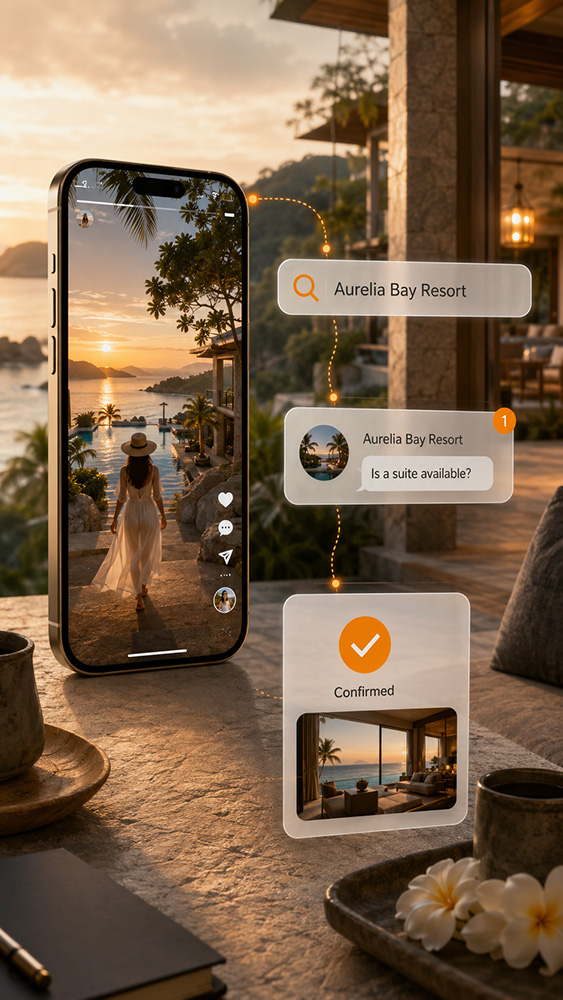
A platform can help identify creators and track links. It does not automatically solve permits, location access, interpretation, production timing, creator care, weather disruption, usage rights, cultural review or the handoff between marketing and sales.
Local operations bring four systems together: creator, production, distribution and sales. In Vietnam, that can include a local fixer, route planning, venue coordination, transport buffers, translation, payment support and a response process when a location or schedule changes.
- Validate creator quality beyond surface metrics.
- Cook the brief for the creator’s audience rather than translating a global deck.
- Design an itinerary that produces evidence, not only scenic check-ins.
- Secure permissions, location access and a realistic contingency plan.
- Prepare multilingual landing pages, inquiry tags and partner handoff.
- Negotiate content usage rights for paid, owned and sales channels.
Connect creator content to direct and partner sales
Creator marketing and travel trade do not need to compete. Content can create named preference; an OTA, travel agent or local partner can complete the transaction. The problem appears when the partner does not know which product the creator featured, or the brand cannot attribute the inquiry.
Creators create a reason to choose. Distribution creates a route to purchase.
Before publication, prepare a commercial kit: approved product naming, best creator links, market-specific FAQ, image rights, booking contacts, response times and an assisted-booking field in the CRM. The same content should also be reflected on a fast mobile landing page so direct buyers do not encounter a different promise.
Measure the chain, not only the post
| Stage | Suggested KPI | Management question |
|---|---|---|
| Discovery | Qualified reach, completion, saves | Did the right audience pay attention? |
| Memory | Profile visits, brand search, direct traffic | Did they remember and look for the brand? |
| Evaluation | FAQ use, itinerary views, inquiry quality | Did the content reduce uncertainty? |
| Purchase | Direct and assisted bookings, lead-to-sale | Which role and route contributed to revenue? |
| Compounding | Organic footprint, reusable assets, partner demand | Does the content retain value after the campaign? |
Do not treat an isolated tracking link as the full answer. Cross-border travel decisions involve several devices and partners. Combine platform data with search trends, CRM tags, agency feedback, call-centre notes and post-booking questions.
A 90-day Vietnam market-entry pilot
- Select one commercially ready offer: a hotel package, cruise, event, food experience or route with clear capacity.
- Define one audience: for example Philippines young professionals, Thai weekend travellers, Korean families or Indonesian food-and-lifestyle travellers.
- Build the proof stack: discovery, evidence and a clear buying route.
- Prepare local execution: permissions, production, interpretation, logistics and issue handling.
- Instrument the funnel: landing page, UTM, inquiry labels and assisted-booking reporting.
- Review at day 30, 60 and 90: improve the creator mix, sales handoff and content gaps before scaling.
Related reading includes Korean content strategy for Vietnam tourism, three essentials for international influencer campaigns, and international KOL strategy for Vietnam tourism. For the role of long-form video in search and consideration, see YouTube as a launchpad for Vietnam tourism.
The readiness test before scaling
Scale only when the product experience is stable, the team can serve international guests consistently, sales records the source of inquiries, and the pilot has produced at least one meaningful mid-funnel or commercial signal. More creators cannot repair a broken booking flow.
IMVN supports international and regional teams entering Vietnam with market cooking, creator selection, local production, itinerary and permit coordination, interpretation, usage rights, distribution planning and reporting. The objective is not more content for its own sake; it is a repeatable system that turns Vietnam interest into named-brand demand.
Sources and use of benchmarks
Market context can be checked against the Vietnam National Authority of Tourism and the Expedia Group Traveler Value Index. Benchmarks should be treated as directional and validated for the brand’s market, segment and sales cycle.
Planning a similar creator campaign?
Share your market, category and objective. IMVN will respond with practical recommendations for the next step.
Request campaign advice →