Followers and reach show that content had an opportunity to be seen. They do not show whether the right industry buyers watched, a critical question was answered, or an asset reached a distributor pipeline.
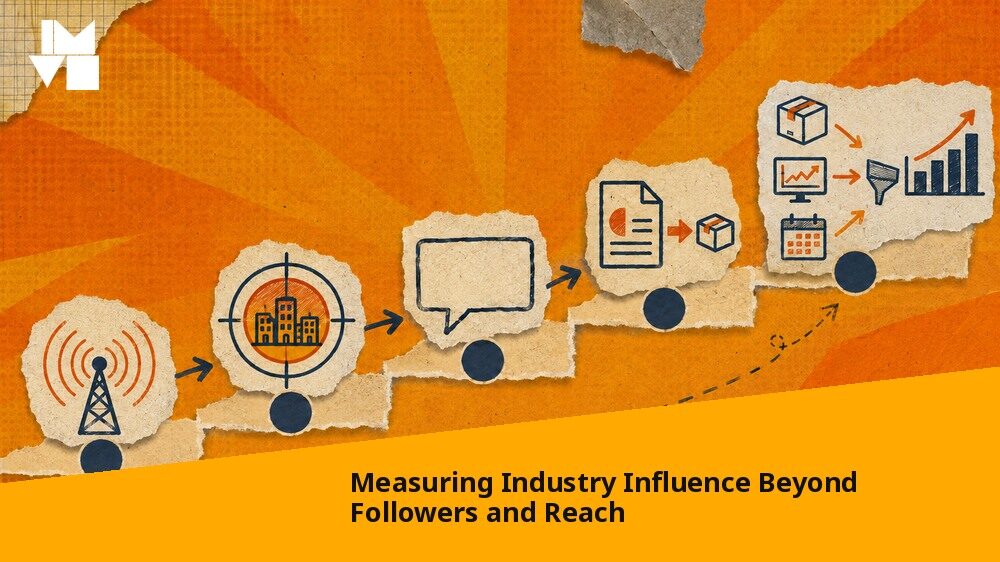
Measure industry influence from attention to buyer action: who engaged, what they said, where the asset was reused and whether it created a qualified next step.
Separate exposure from influence
Exposure includes impressions, reach, views and completion. Influence begins when someone in the target audience saves, shares, asks a qualified question, opens supporting material, requests a sample or uses the asset to persuade colleagues. Both layers matter, but one cannot stand in for the other.
The 2025 Edelman–LinkedIn report finds that thought leadership can enter hidden buyers’ vendor-vetting process in its US sample. That supports measuring content use during evaluation, but it does not prove that a view creates a purchase order in Southeast Asia.
Define target signals before the campaign starts
A target signal may be a viewer from a named account, a distributor question, registration with a corporate email, a demo request, a sample request or a sales note stating that the buyer mentioned an asset. Choose three to five signals the team can actually collect.
If CRM, platform and agency reporting cannot be connected, state the attribution limit at the start. A complex model does not fix missing data.
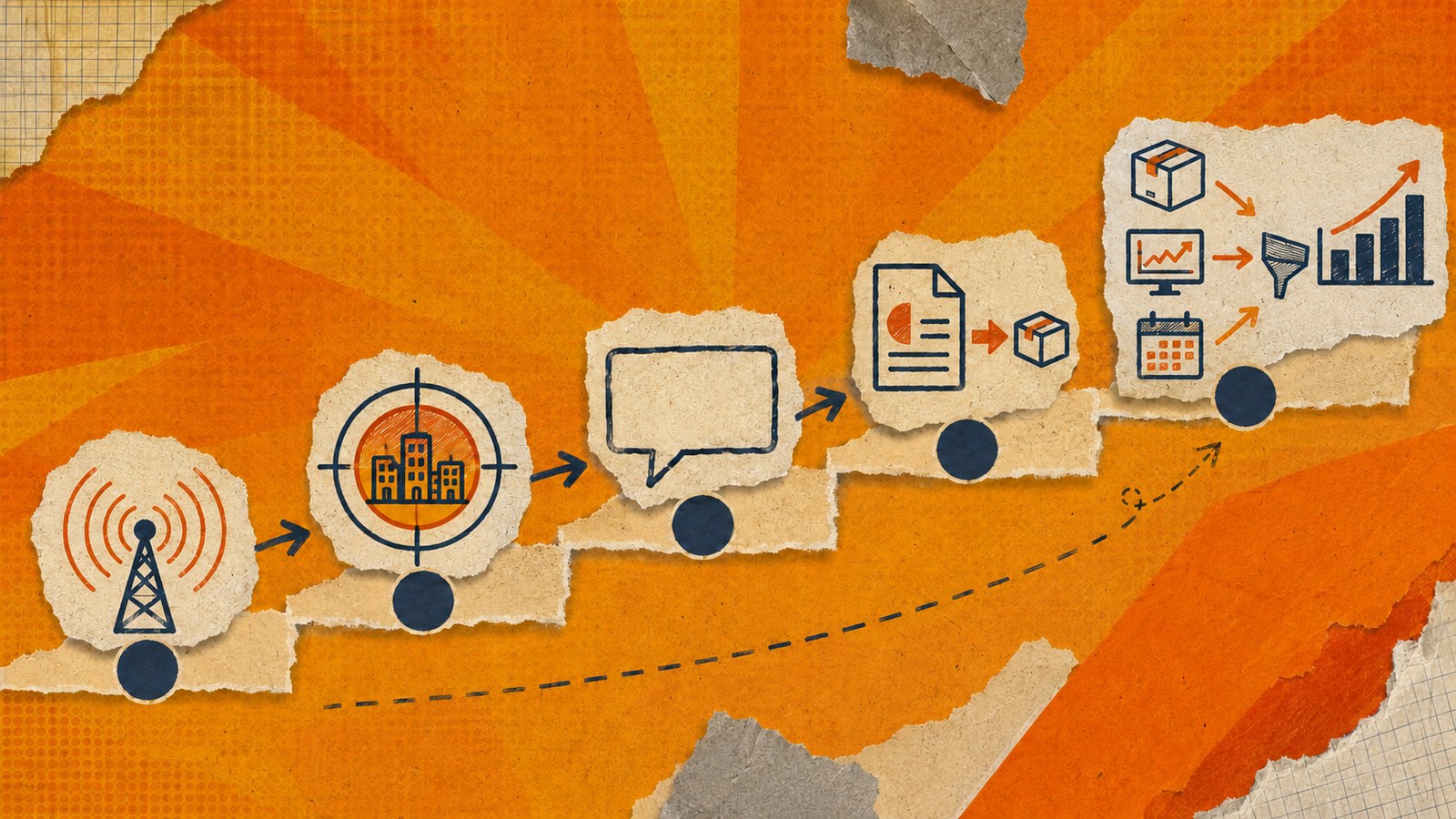
A KPI ladder for industry influence
A KPI ladder shows C-level leaders and Procurement what each metric answers. An early campaign may stop at qualified engagement and asset reuse; a pilot closer to sales may track demo requests or distributor meetings.
Each level needs its own data source, owner and decision threshold.
| Level | KPI | Data source | What it supports |
|---|---|---|---|
| Exposure | Reach, views, completion | Platform | Content was distributed |
| Audience quality | Target-role interaction | Profile review, account list | The right community was reached |
| Learning | Questions, objections, repeated topics | Comments, webinar, sales notes | What buyers care about |
| Enablement | Asset reuse, internal share | Sales and distributor logs | Content entered the sales process |
| Commercial action | Sample, demo, qualified meeting | CRM, form, partner report | A qualified next step occurred |
Measure each influence node against its job
Evaluate experts through question quality and asset citation, streamers through qualified participation and demo requests, and distributor voices through dealer inquiry and content reuse. Combining every role into cost per engagement removes the reason each person was selected.
The expert, distributor staff and industry streamer matrix connects roles to KPIs during briefing.
Set the attribution window around the buying cycle
The global sample in the 2025 6sense study reports B2B buying journeys lasting several months, with buyers controlling the timing of sales contact. A seven-day report may capture content response but is not enough to conclude vendor-selection influence.
Keep campaign IDs in links, forms and CRM notes; ask sales or distributors which assets buyers mention; and run a post-campaign review after follow-up has had time to occur. Separate observed, reported and inferred influence in the report.
IMVN builds a measurement plan around pipeline
IMVN can turn a market brief into a KPI ladder, tagging rules, reporting template and reconciliation schedule with local partners. The team can also read qualitative signals to update the question bank, shortlist and asset plan for the next cycle.
A workable brief states the market, buying group, influence role, assets, available data systems and desired commercial action. IMVN can then recommend measurable signals without promising attribution the data cannot support.
Planning a similar creator campaign?
Share your market, category and objective. IMVN will respond with practical recommendations for the next step.
Request campaign advice →