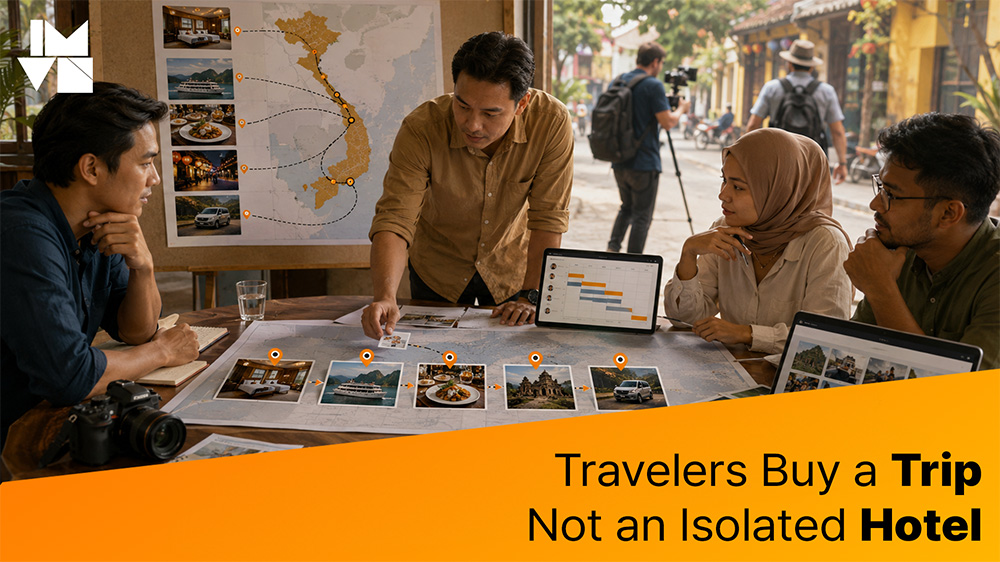



A practical perspective for CEOs, marketing leaders and commercial teams in Vietnam’s tourism sector.
Korean travelers book with evidence, not impulse
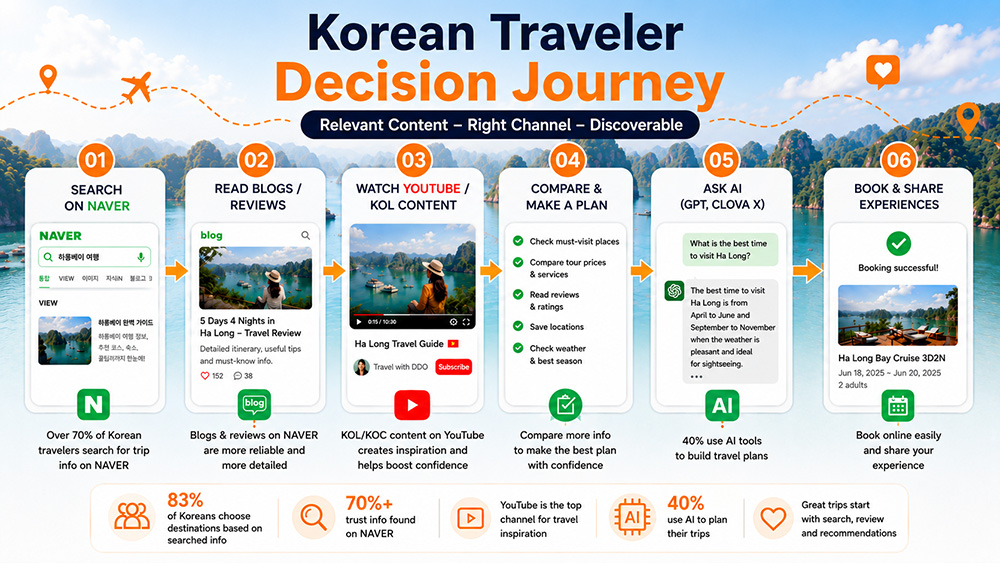
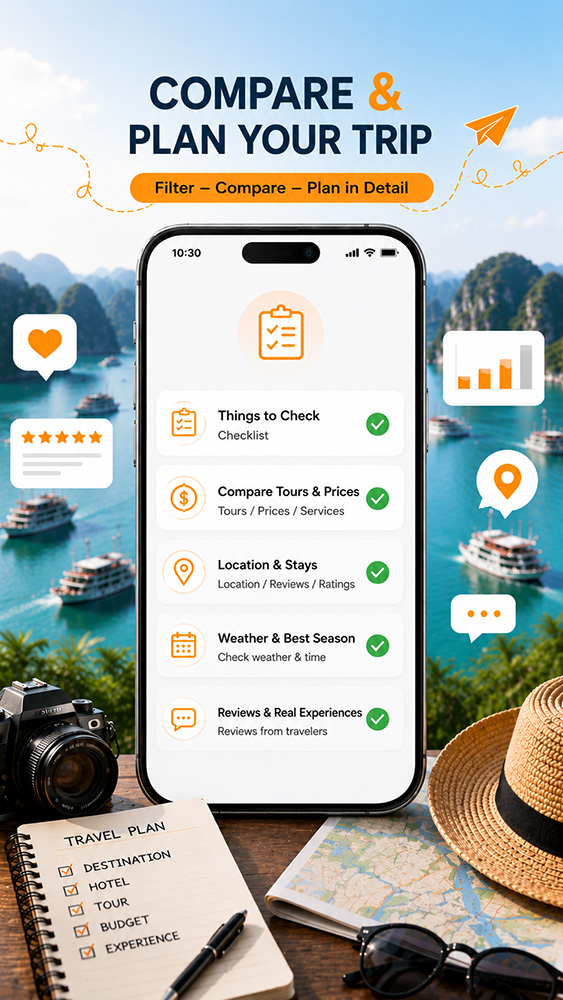
A defining feature of the Korean outbound market is the amount of research completed before payment. Travelers read long-form blogs, watch itinerary videos, compare several sources and check comments from people who have already visited. Risk avoidance often produces a highly detailed planning journey.
For Vietnam tourism businesses, the implication is direct: if there is not enough Korean-language content to answer the questions travelers are asking, the brand may be absent from their decision process, regardless of the quality of the actual service.
AI is accelerating this behavior. Reports cited in the source draft indicate that 40% of global travelers used AI for trip planning in 2025 and 62% were willing to use it in the near future. Korean travelers ask practical questions about pools, breakfast, cabin types, views and transportation.
AI does not invent reliable travel details. It synthesizes information from websites, blogs, creator reviews and public discussions. Brands with specific, authentic Korean content therefore have a better chance of being found and referenced. Without useful content, a brand is unlikely to appear in AI-assisted discovery.
Two content sources that compound over time
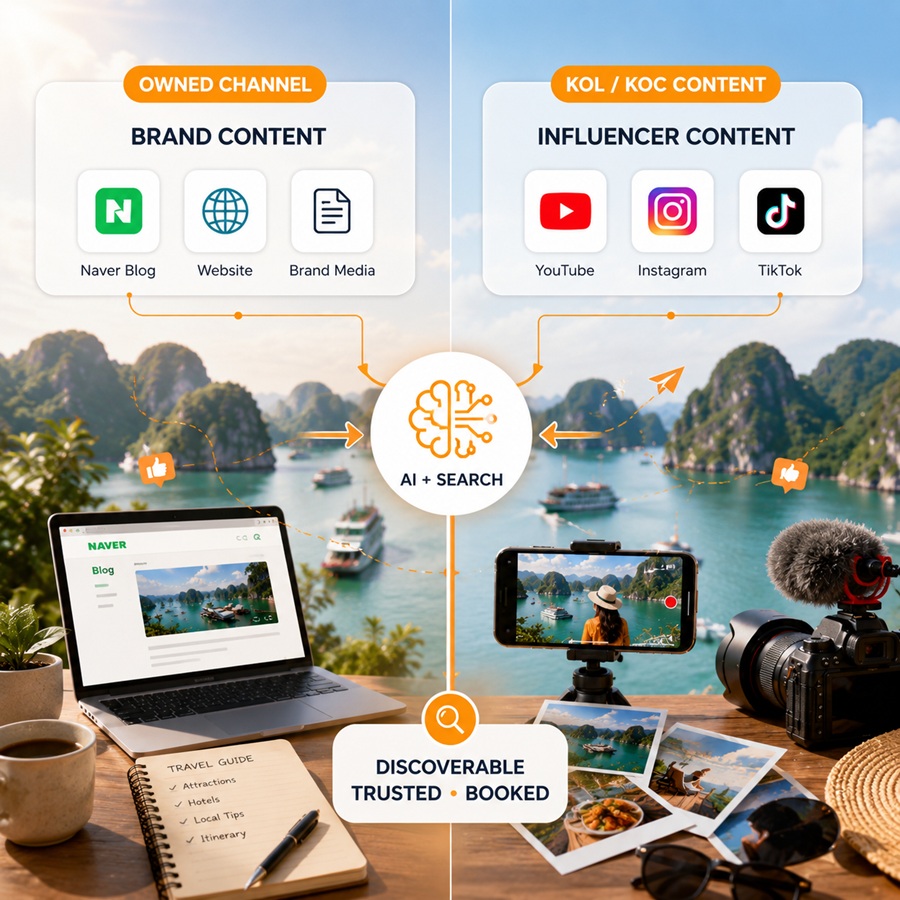
Not every asset creates equal value. For the Korean market, two sources can serve real readers, search systems and AI discovery at the same time.
Source 1: Owned channels, especially Naver Blog
Naver remains a major discovery gateway in Korea. Its ecosystem rewards fresh, detailed and consistently updated material, giving smaller tourism businesses a realistic opportunity to build visibility through disciplined publishing.
Hotels, cruises and destinations should explain facilities, rooms, food, services, transportation and common pre-booking questions in Korean. The content does not need to look excessively polished; it needs to be accurate, detailed and easy to verify.
A useful blog post can continue attracting discovery for years. A content library should therefore be managed as a compounding asset, not a one-campaign media expense.
Source 2: Content from Korean KOLs and KOCs
Korean creators are often highly detailed. Naver reviews include real photographs, day-by-day itineraries and practical observations, while YouTube videos document each stage of the experience. This is evidence that audiences tend to trust more than a sales brochure.
A million followers are not required. A creator with 30,000 followers and a substantial review can produce more lasting search and AI value than a mega-influencer posting one lightly captioned image. This is one reason brands increasingly work with micro and mid-tier creators.
The compounding principle is straightforward: creator reviews plus a consistently maintained Naver presence create a growing information base. Every new article expands the brand’s presence in Korean search and the information AI systems can retrieve.
Content must reflect travel demand, not only describe a destination
Publishing in Korean is only the first step. The editorial line must also reflect the motivations shaping current Korean travel behavior, particularly wellness and independent small-group travel.
Wellness is moving from trend to expectation
For the MZ generation, a healing trip offers distance from work pressure and city life through nature, quiet and emotional recovery. For middle-aged and older travelers, wellness is more structured: spas, hot springs, retreats, healthy food and longer stays.
- Younger travelers: restorative experiences, nature and calm environments.
- Middle-aged and older travelers: higher willingness to pay for quality self-care and comfortable pacing.
The source draft cites Daxue Consulting figures showing 49% of Koreans interested in health-related travel and 46% willing to spend strongly on wellness. Ha Long Bay has a natural advantage, yet Korean content often repeats the familiar overnight-cruise, cave and kayak formula. A clear “24-hour healing experience on the bay” is a more distinctive editorial opportunity.
Independent and small-group travel bypasses traditional agencies
Sources in the draft place independent Korean travel at 77% in 2019 and 83% in 2025. Groups of two to four book flights, rooms and activities online, while almost 30% have traveled solo at least once.
This audience is strongly influenced by YouTube and travel creators rather than agency catalogs. The cited Visa/Vietdata data also points to a sharp increase in Korean accommodation spending in Vietnam during the first half of 2024, consistent with a move toward higher-quality self-booked trips.
The commercial opportunity is the younger independent traveler and small group with rising spend but limited reliance on traditional distribution. YouTube, Instagram and Naver Blog are the three most important touchpoints for this audience.
For international businesses operating in Vietnam
This opportunity is not limited to Vietnamese-owned tourism companies. International hotel groups, resorts, cruise operators, golf courses, attractions, retailers and DMCs already operating in Vietnam can use Korean-language content as a local growth asset. The important step is to connect what a global brand promises with practical evidence from the Vietnamese experience: room layouts, service details, transportation, food, payment and the questions Korean guests ask before booking.
When creator selection, production and on-the-ground coordination are handled in one market-aware workflow, content becomes more than translation. It gives Korean travelers a credible path from discovery to booking, while helping regional teams learn which messages and experiences deserve further investment.
How IMVN helps tourism businesses build Korean content
Instead of managing creator search, briefing, content control and reporting as separate tasks, tourism businesses can choose a model that matches their stage and investment level.
| Service | Best suited to | Content model |
|---|---|---|
| Korean Co-Op Trip | First market test | Three to five Korean creators produce Naver, YouTube and Instagram content, with costs shared by participating brands. |
| KOL Booking & Management | Brands requiring content control | Creator selection, negotiation, briefing, timeline management, approval and reporting. |
| Content Strategy & Naver Build | Long-term owned-channel investment | Korean editorial strategy, Naver operations, publishing calendar and discovery optimization. |
| Trend-led campaign | Brands targeting a segment | A focused wellness, solo, MZ or small-group content route with relevant creators. |
Explore IMVN’s Expand from Vietnam solution and the Korea market page. For related examples, see the tourism influencer case studies from Korea and Japan.
Start early enough for content to compound
Content gains value over time. A creator review published today may continue to be indexed by Naver and retrieved by AI for years. Waiting allows competitors to build a larger searchable footprint and stronger familiarity with Korean travelers.
A practical first move is a Co-Op Trip that creates the initial content layer, followed by measurement and a decision on deeper owned-channel or segment investment. IMVN can shape the creator itinerary, editorial route and measurement plan for Korea. Contact the IMVN team.
Sources listed in the original draft: Customer Alliance, Expedia Group Traveler Value Index, Phocuswright AI Travel Survey, Alpic AI, Daxue Consulting, Visa/Vietdata, Inquivix and Korea Tourism Organization.
Planning a similar creator campaign?
Share your market, category and objective. IMVN will respond with practical recommendations for the next step.
Request campaign advice →