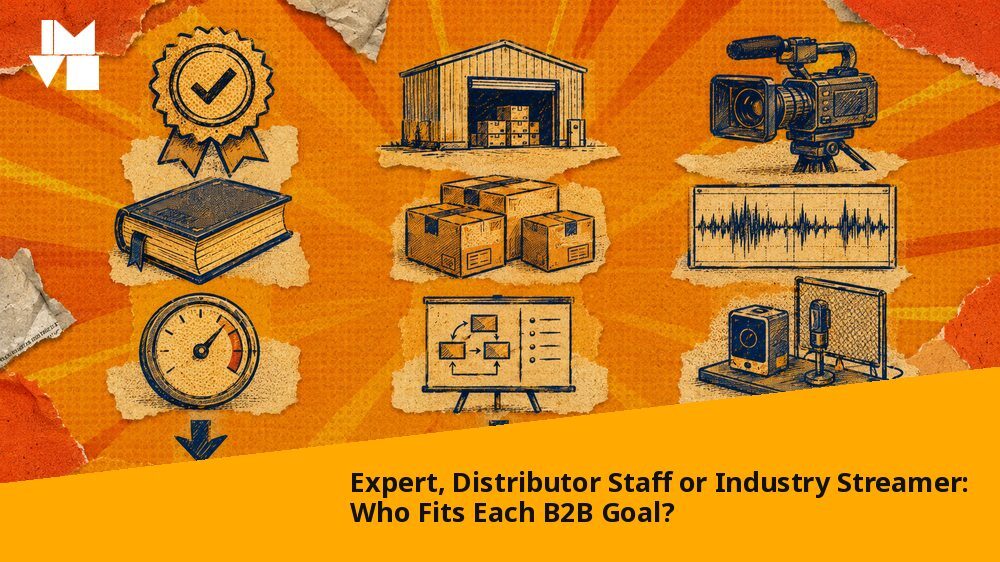
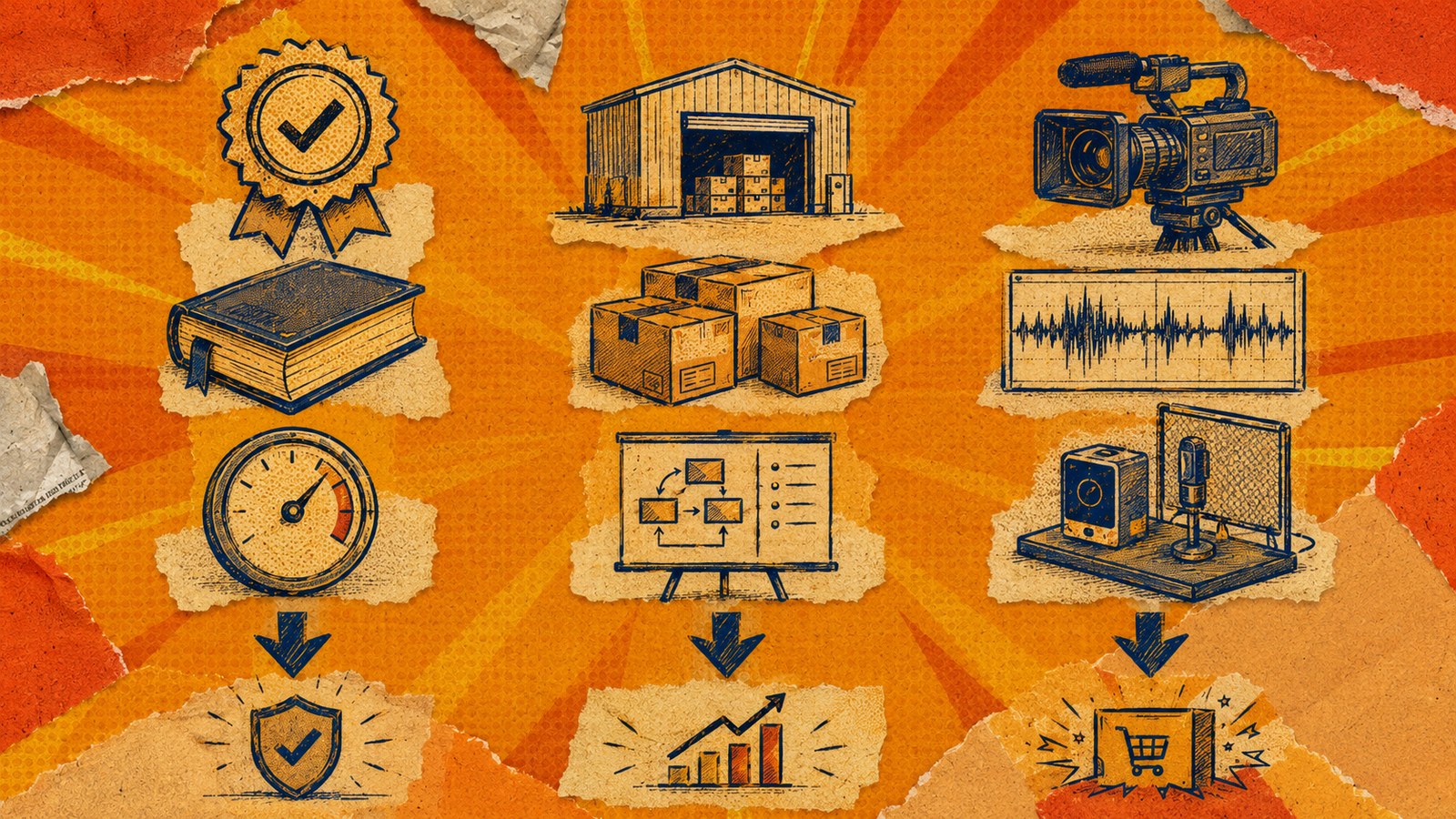
Experts, distributor staff and specialist streamers can all create influence, but they are not interchangeable. The wrong role can sound credible while failing to answer a buyer’s question or produce material sales can reuse.
Start with the proof required: explain a standard, show channel readiness, or demonstrate the product in use.
Use an expert when buyers need logic and risk assessment
Experts are strongest when explaining principles, selection criteria, trade-offs and limitations. They fit webinars, panels, analysis and method-based reviews. Check subject credentials and claim boundaries; a senior title does not guarantee clear communication or audience fit.
For regulated products or technical claims, base expert content on approved documentation and separate personal judgement from information supplied by the brand.
Use distributor staff when buyers need implementation proof
Product trainers, sales specialists and category managers know the questions dealers and end users ask repeatedly. They can demonstrate workflows, explain service routes and translate brand material into local sales language.
They count as public-facing industry influencers only when they actually speak in public. When content is made in an employee role, secure employer approval, disclose the relationship and separate professional opinion from the distributor’s commercial commitments.
Use a specialist streamer when the product must be seen working
A capable specialist streamer asks useful questions, keeps a demonstration moving and handles real operating situations. This role fits equipment, software, workflows and categories where buyers need to see the process before requesting a sample or meeting.
Concurrent views alone do not measure live-stream quality. Review the share of category-relevant questions, participation from target accounts, cut-down potential and the host’s ability to stay within approved claims.
Select the role against the B2B objective
A pilot can combine roles, but every person needs a defined job. Do not force an expert into entertainment they cannot carry, and do not ask a streamer to replace an unverified technical conclusion.
The right role gives buyers the right proof at the relevant decision point.
| Objective | Primary role | Format | Signal to measure |
|---|---|---|---|
| Explain the category | Expert | Analysis, webinar | Technical questions, saves and shares |
| Show channel readiness | Distributor staff | Training, demo | Dealer inquiry, asset reuse |
| Show user experience | Industry streamer | Live demo, comparison | Qualified questions, demo requests |
| Build buyer proof | Expert + distributor | Interview, case walkthrough | Internal shares, meetings |
| Test market pull | Streamer + local partner | Pilot content | Sample requests, target accounts |
Budget and contract around the actual role
Experts may require research time; distributor staff need company scheduling and approval; streamers require production, platform formatting and moderation. Separate usage rights, paid media, editing permission, exclusivity, travel and review rounds from creator or speaking fees.
Use the industry-influencer vetting checklist to check credentials, audience, claim history and conflicts before negotiating.
IMVN can assemble the roles into an evidence chain
IMVN can turn a buyer question into a role brief, find candidates, verify the public footprint, clarify employer approval, design the content flow and deliver assets to the brand or distributor. For multi-market work, the shared fact set can stay fixed while examples and formats are localised.
If the important nodes are not yet clear, start with an industry influence map rather than a general request for B2B KOLs.
Planning a similar creator campaign?
Share your market, category and objective. IMVN will respond with practical recommendations for the next step.
Request campaign advice →