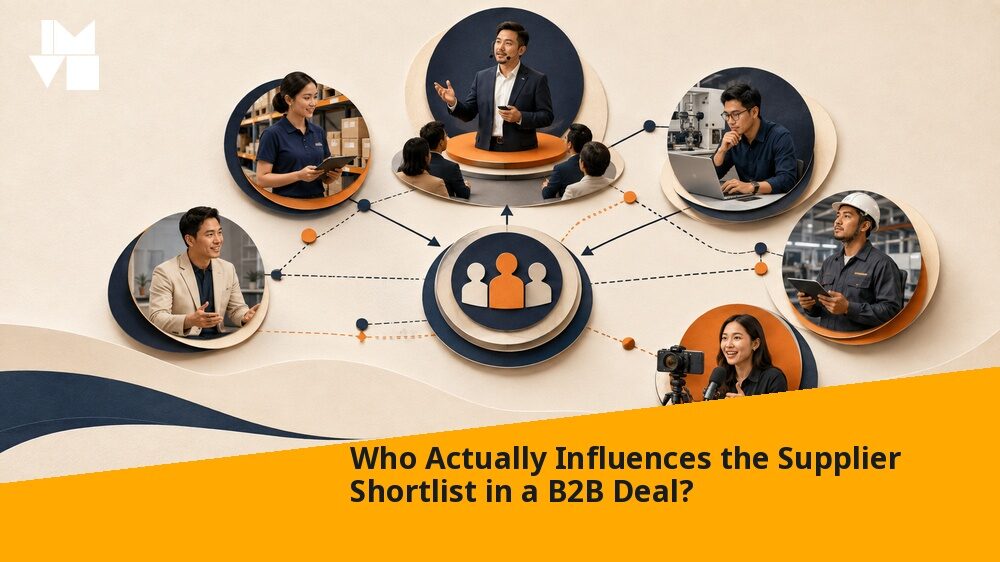
A supplier shortlist is rarely one person’s decision. Purchasing manages the process, but technical, finance, operations, channel sales and leadership can each promote or remove a vendor. Outside the company, category experts, distributor trainers and professional communities shape the early impression.
Follower count is therefore a minor input. The brand needs to know who is consulted, who can veto, who will use the product and who must defend the choice to management. That is the deal’s influence map.
Public and hidden influencers work differently
Public influencers publish or appear openly: experts, technical streamers, speakers, trade journalists and distributor employees with their own communities. Hidden influencers may never post, but they review specifications, budgets, documents or trials.
A hidden stakeholder is not booked like a creator. The internal champion needs evidence for that conversation. Public-facing experts can join content when their role, benefit and disclosure are clear.
Start the map with the decision to be influenced
If the objective is a technical review, engineers and operators carry more weight than a celebrity. If the distributor needs store traffic, an end-user creator may be more useful. If management doubts the opportunity, market evidence and channel voices should come first.
There is no single influencer list for every stage of a deal.

| Influencer | Main effect | Risk to manage |
|---|---|---|
| Technical expert | Standards, fit and use | Unsupported claims or conflict of interest |
| Distributor employee | Sales, training and channel support | Employer approval may be required |
| Category streamer/reviewer | Demo, comparison and explanation | A broad audience may contain few buyers |
| Operator/end user | Use case and practical friction | One experience does not represent a market |
| Internal champion | Moves the proposal through approval | May lack evidence to defend the choice |
Test industry prominence through the network
Someone famous to consumers may have little category influence. Examine who engages with the person, where they speak, whether they have worked with distributors or associations, whether peers cite their content and whether they can answer difficult technical questions.
For distributor employees, verify whether they speak personally or for the company. A job title is not an endorsement unless the employer has approved it.
An influence portfolio needs complementary roles
One expert can frame the issue, a category streamer can demonstrate it, an operator can provide a use case and an end-user creator can test the explanation. Four similar profiles mostly add audience overlap.
The B2B influencer marketing for Southeast Asia expansion pillar connects this portfolio to sales and market entry.
Define the boundary of every voice
An expert should not read an advertisement like a celebrity. Distributor staff cannot promise terms for their employer. Creators cannot extend technical claims. An internal champion needs short, sourced assets that fit a deck. One fact set supports different formats and different speaking rights.
Contracts should specify channels, term, editing, reuse rights and whether the participant’s employer name or job title may be used.
IMVN builds the shortlist from the influence map
IMVN can define the buying group with the brand, set influence criteria, identify public-facing experts and creators, check the audience and design content roles. For hidden influencers, the work centres on assets an internal supporter can use.
A useful brief names one decision to influence. Once that is clear, the shortlist becomes smaller and the brand avoids paying for fame that does not move the deal.
Planning a similar creator campaign?
Share your market, category and objective. IMVN will respond with practical recommendations for the next step.
Request campaign advice →