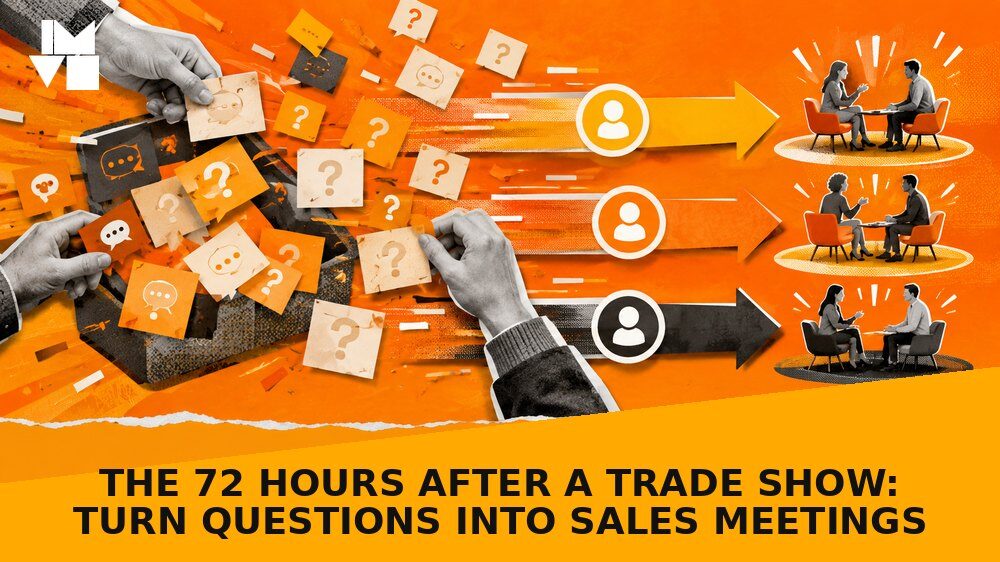
After several show days, a company may hold business cards, photographs of forms, livestream questions, creator footage and promises to reply across several teams. If it only imports the contacts and sends one generic thank-you email, the most valuable part of the influencer marketing work, including context, specialist voices and trust-building content, remains at the booth.
The 72-hour process in the trade show influencer marketing series must keep three things together: the buyer’s question, content featuring a creator or expert, and the sales next step. IMVN can help the brand or agency classify this material, check statements and usage rights, adapt the follow-up for the target market and hand it over with context.
After three days on a booth, teams often have business cards, photographed forms and scattered notes. Waiting a week to consolidate them means contacts have lost context and staff no longer remember which product prompted each question.
The first 72 hours connect the floor to sales inside the international trade show operating system. Preserve the question, assign the right owner and offer a suitable next step.
Use the end-of-day handoff to retain creator and buyer context
The handoff should record the source of each question: pre-show content, a booth conversation, an activation, the livestream or a message sent to the creator. This tells the team what the buyer has already seen and prevents the buyer from repeating the story. It also shows IMVN which content is opening the right market problem.
A question is valuable because it includes the person’s role, the product they saw and the exchange that took place. Remove that context and a business card becomes only contact data. Run a short handoff after each shift to move notes, photographed forms and promised responses into one system.
Use a minimum structure: person, company or role, question source, product, question, staff member, answer already given and next step. Livestream comments should enter the same system rather than remaining on the host’s phone or account.
Segment by need, obstacle and readiness
Do not rank a question by whether the person looked prominent on camera. A short question about certification, distribution rights or supply capacity may matter more than many general comments. The team should read the person’s role and commercial context before deciding whether the expert, creator or sales team should continue the response.
Need states what the contact wants to achieve; obstacle states what blocks progress; readiness determines priority. Use groups such as action within 24 hours, evidence within 72 hours and longer nurture. Base the status on behaviour such as a sample, quote, demo or colleague introduction, not staff intuition.
Turn repeated questions into creator and expert content
The creator can restate a question in accessible language, while the expert owns the answer that requires accuracy. IMVN helps select the right voice, check the content with the brand and define the distribution channel. Questions from a trade show livestream can become short videos, FAQs or follow-up content when usage rights are in place.
When many people ask the same question, stop answering it only one-to-one. Verify the response, confirm spokesperson permission and convert it into an FAQ, short video, technical note or analysis. The guide to livestreaming for on-floor and online buyers shows how to separate the host, expert, product and sales roles when repeated questions become content.
Separate content by role in the buying decision
One creator asset should not be sent unchanged to everyone. A technical buyer may need the demonstration and specifications; a distributor needs the channel answer; an end user needs instructions and a place to buy. Reuse must retain approved information and place the content at the right step of the buying decision.
Buyers need specifications, standards, supply capacity and a vetting route. Distributors need margin logic, channel support, training and sales material. Users need instructions, proof and a purchase route. Do not send the entire library to everyone; provide the minimum material that moves their decision.
The first email should name the product, question and person met. Answer what was promised, attach one or two relevant assets and propose one concrete next step. Templates can preserve the structure, but the conversation details must be accurate.
Keep a 72-hour, seven-day and 30-day rhythm
The creator’s contribution does not end when organic distribution slows. During the first 72 hours, content can answer a question; within seven days, it can support a call or demonstration; across 30 days, the data can show which topics still generate responses. The trade show influencer marketing measurement framework keeps those roles separate.
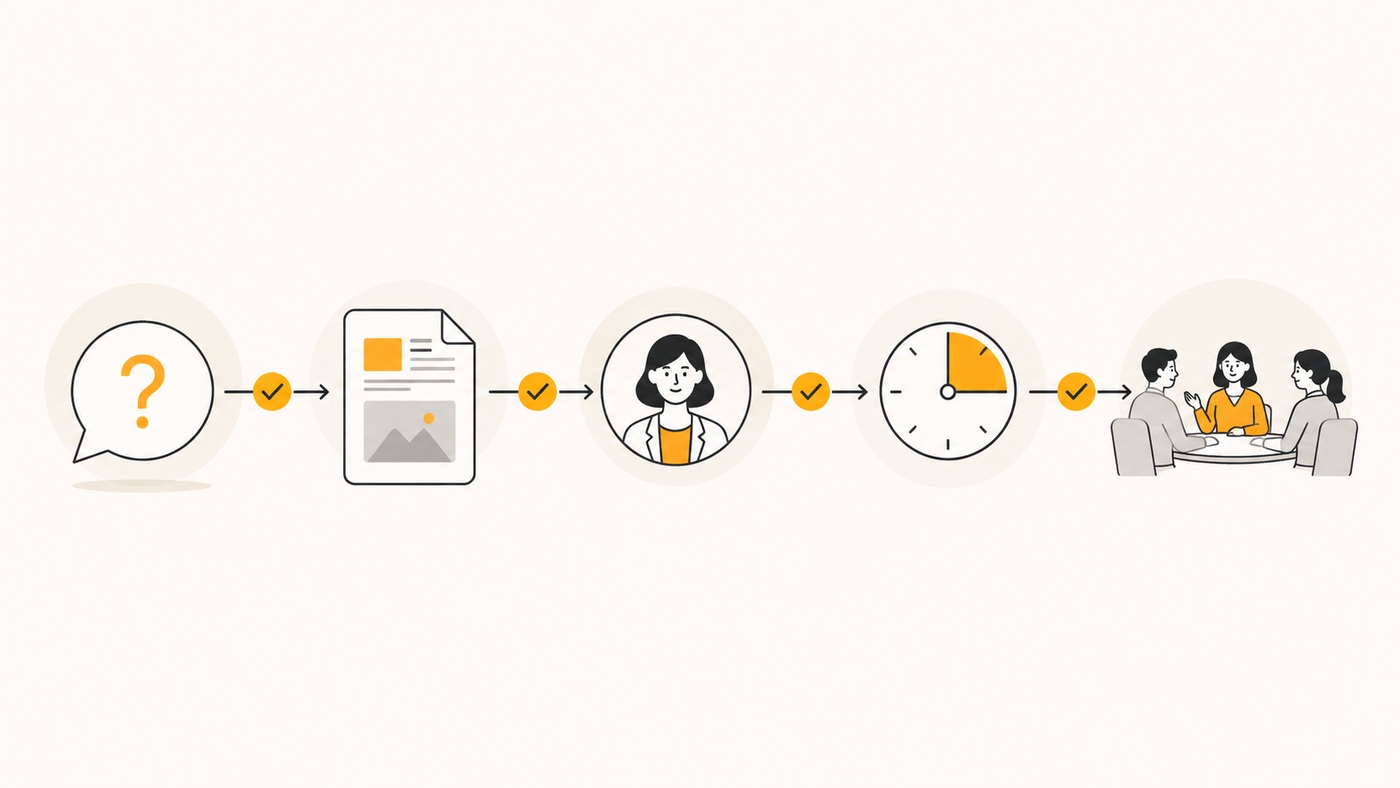
Within 24 hours, acknowledge the question and name the owner. Within 72 hours, provide the answer or verification deadline. Within seven days, confirm the demo, sample or call. Within 30 days, marketing and sales review status, stalled reasons and missing material. The trade show measurement framework connects this rhythm to sales opportunities.
A distributor may need demonstration clips, expert answers, product images and FAQs for local follow-up. Confirm channel, term, edit permission, language and use scope before handoff. Material without clear reuse rights should remain an internal reference.
Lock usage rights, statements and data before redistribution
IMVN can check the creator content usage scope, secure approval for answers, adapt follow-up content and coordinate the creator, expert, brand and sales team. Contact data still needs to follow the notice and rules of the market. An agency should not transfer information from a creator account to the brand without an appropriate basis.
A visible face, expert statement or contact record is not automatically cleared for every use. Check event notices, participant consent, spokesperson contracts and local data requirements. Collect only what the stated next step needs, restrict access and apply the company’s retention policy.
Assign one person to close the log and hand over data at the end of every show day. IMVN can classify questions by creator source, edit post-show content, check usage rights and adapt the follow-up before it reaches sales in the target market.
At the end of each show day, reserve a fixed period to reconcile notes, business cards, scan data and online questions. Every contact needs an owner, priority and task for the following morning. Waiting until the event closes to consolidate everything removes the context from too many conversations.
The handoff also reveals repeated questions that should be added to the next day’s material. A verified answer may support an email, short video or meeting, provided the claim and image rights remain within the approved scope. The first 72 hours therefore begin on the first evening, not after the whole team returns to the office.
Planning a similar creator campaign?
Share your market, category and objective. IMVN will respond with practical recommendations for the next step.
Request campaign advice →