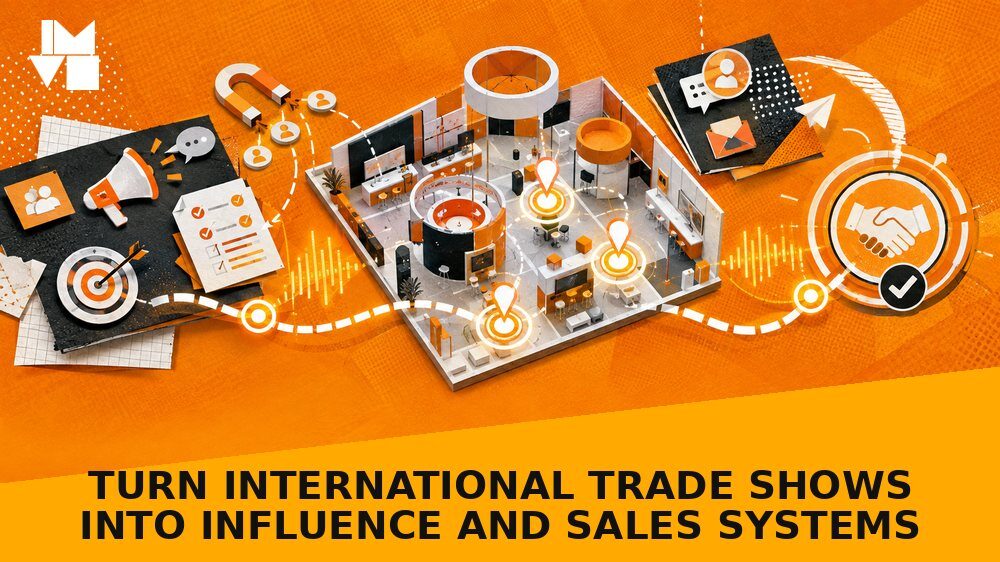
A crowded booth can make a trade show look successful, but foot traffic does not show whether the brand has created influence or a sales opportunity. For a company entering a new market, the real gap usually sits between three questions: who brings the right people, who helps them understand the product, and what content continues to persuade them after they leave the booth?
IMVN approaches trade shows as a cross-border influencer marketing agency. The event agency or organiser handles the venue, stage, sound and general event operations. IMVN focuses on the creator and content layer: selecting and booking the right people, building the brief, adapting the story for the market, controlling approved product information, agreeing usage rights, and routing questions from content to sales.
This article is not a guide to organising a trade show. It helps marketers turn the periods before, during and after the event into a deliberate influencer marketing programme: creators give the right audience a reason to care, the booth experience produces credible material, and post-show content keeps the conversation moving towards a buying decision.
Define the roles of the event agency, IMVN and sales
An event agency creates a space that can operate: the booth matches the design, the stage runs to schedule, equipment works and visitors move safely. Those elements are necessary, but they do not decide who should appear in the content, which voice can persuade a buyer, or which creator has the right community in the target market.
IMVN works on that influence layer. Depending on the objective, the agency may find a creator who can guide an experience, an industry expert who can explain the technical points, or a host who understands the product well enough to connect on-floor questions with remote viewers. The brand retains control of product information and commercial terms; sales receives contacts with context and a clear next step.
Clear roles prevent the company from buying the wrong service. A polished stage cannot compensate for a creator with the wrong audience. A relevant creator will also struggle to create value without a product to experience, a story to tell and a route that moves interest to sales.
A busy booth can still produce no meetings worth pursuing. This usually happens when communications, on-floor activities and sales follow-up run as separate workstreams. Each team collects a different set of signals, so the event never becomes one traceable buyer journey.
This playbook is for Vietnamese companies exhibiting in overseas markets. It connects the 30 days before the show, the show days and the following 30 days into one operating system: attract the right people, create a useful product experience, capture real questions and move each contact to an appropriate commercial step. Teams that still need to identify the priority groups can start with IMVN’s guide to building trade-show demand before visitors reach the booth.
Separate foot traffic from the signals creators produce
Influencer marketing adds another distinction: people who arrive because of the creator, people who stay because of the content, and people who act because of the product. These groups may overlap, but they should not be merged. Without a recorded source and next action, the company only knows that the stage was busy; it cannot tell whether the creator attracted the right audience.
Foot traffic shows whether the location or activity attracts attention. It does not show whether visitors work in the target sector, influence a buying decision or want to test the product. Track three layers separately: observers, participants and people who leave a commercial signal such as a sample request, demo booking or distribution question.
This separation prevents an attractive but unusable report. A crowd can provide a strong setting for content; a qualified conversation record is what the sales team can act on.
Define the most important action a suitable visitor should take before choosing a host, game or giveaway. A technical product may need a detailed demo booking. A consumer product may need a sample request and distributor conversation. A category that requires education may need a moderated expert Q&A.
An event can still have several metrics, but it should have one primary action that shapes the visitor flow, data capture and staffing. Secondary activities should move people closer to that action instead of competing with it.
Before the show: use creators to give the right people a reason to book
Creator selection starts with the role of the community they can reach. For a technical product, an industry expert with a smaller but highly relevant audience may generate better meetings than a mainstream personality. For consumer goods, a creator who can demonstrate the product and answer questions close to real use can show viewers why the booth is worth visiting.
IMVN can build a market-specific creator and expert shortlist, check category fit, availability, brand conflicts and the person’s ability to join pre-show content. This connects directly to using creators to build demand and book meetings before a trade show; it is not the same as buying one post that announces a booth number.
The organiser’s visitor database is not the exhibitor’s target list. From T–30, identify the buyers, distributors, experts, trade media and content partners to invite, then give each group a specific reason to spend time at the booth: an unreleased demonstration, an industry Q&A or a private discussion about distribution requirements.
The pre-show content sequence should answer four questions: what the company is bringing, who will be present, what the visitor will learn and how to book. Every post or invitation should lead to a trackable action rather than stopping at the booth number.
At the show: turn demonstrations into content and trackable actions
The creator does not need to replace the product expert. A better role is to bring the buyer’s problem into the demonstration, ask the expert to explain the difficult points, and turn technical language into content that people can follow. When the creator also has a distribution channel, the same demonstration can serve visitors at the booth and people who never reached the show.
On the floor, the host controls pace, the expert explains, the product team protects approved claims and sales identifies who needs a deeper conversation. If the session is streamed, online viewers should receive the same core information and a clear route for questions or follow-up registration.
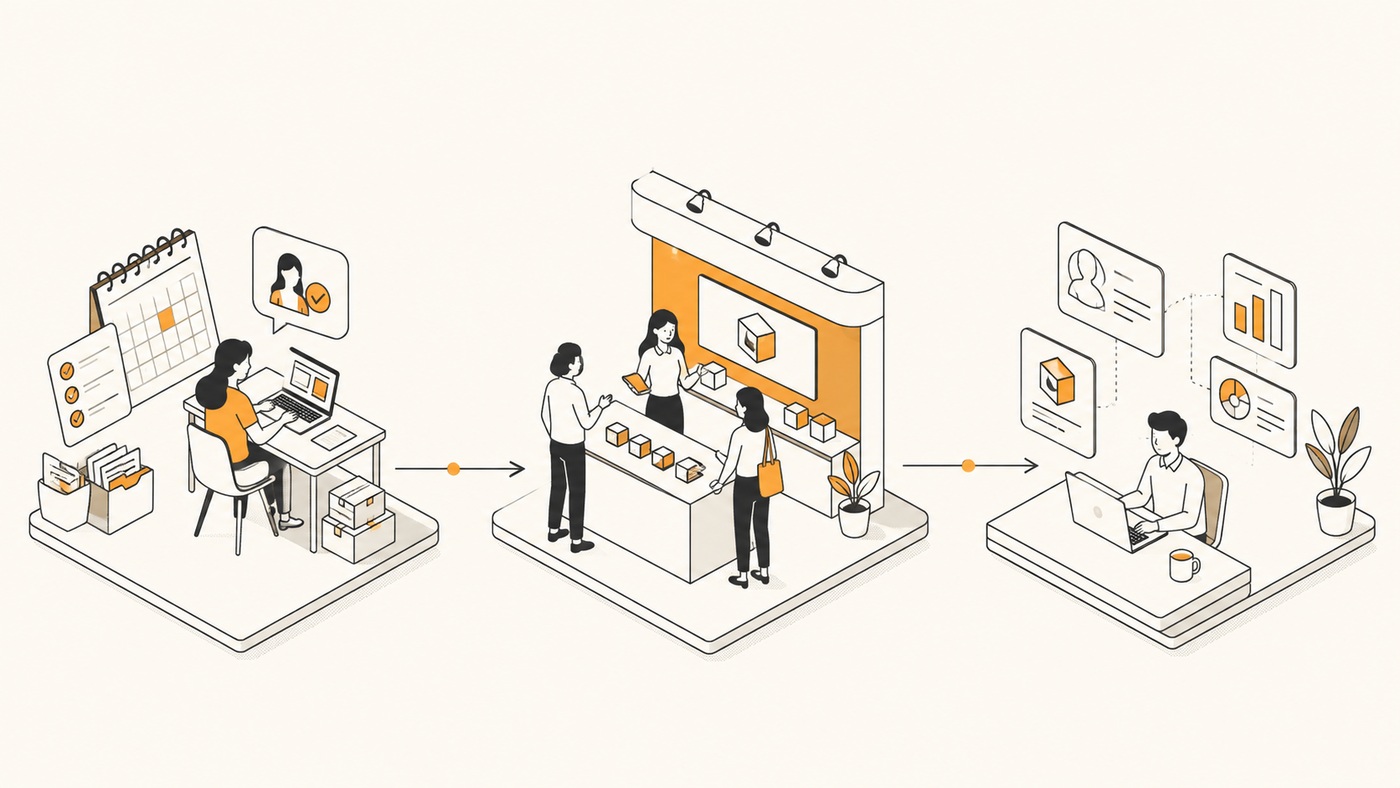
The guide to livestreaming from the trade show floor covers this two-audience operation in detail. At minimum, lock one product information source, one person who approves answers and one handoff route for questions.
Use real questions and reactions as market data
The influencer marketing agency should retain the source of each question: a creator video, a livestream comment, the experience area or a private meeting. The source shows which content opened a useful conversation and which content generated views without moving the buyer further.
Repeated booth questions often reveal the market’s friction: price, standards, warranty, shipping, usage or channel fit. Record the meaning of the question, the person’s role and the product context instead of logging only an interaction count.
Demo reactions matter as well. Where people stop, which point requires an expert explanation and what detail makes them bring a colleague over can inform later content, sales material and message adjustments.
After the show: let creator content support the buying decision
Post-show content should do more than recap the event. A creator asking the right question, an expert answer, a product demonstration or a user’s reaction can become different materials for buyers, distributors and end users. Before reuse, the brand must check image rights, duration, territory, channels and editing scope.
A buyer who asked for a quote should not receive the same email as someone who scanned a code for a gift. Separate contacts into those requiring immediate sales action, those needing more evidence and those showing early interest. Each group needs a different asset and next step.
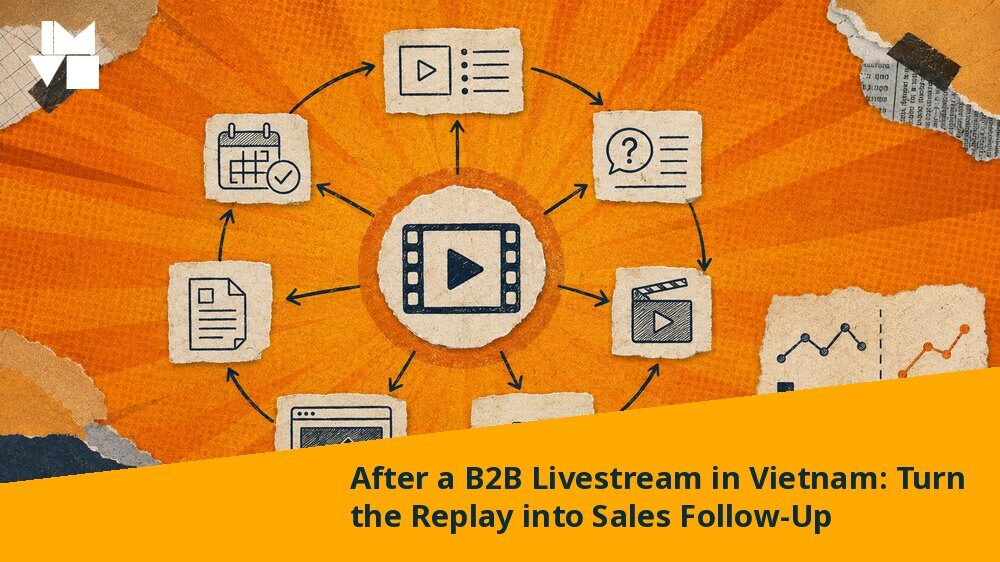
The 72-hour post-show workflow preserves the context while visitors still remember the product, booth and person they met.
The brand owns the objective, approved product information and commercial terms. IMVN manages the agreed creator scope, from selection, booking and briefing to content coordination and usage rights. The event agency handles infrastructure and general on-site operations; the host controls pace, the expert covers the specialist points, and sales decides who requires follow-up and by when.
The responsibility matrix should name the decision maker, owner and informed parties for every task. When the team cannot answer a question on the floor, it should also name who verifies the response and sends it after the event.
Coordinate creators and content from T–30 to T+30
Within this schedule, IMVN owns the agreed influencer marketing work: creator selection and booking, briefs, the content calendar, expert coordination, content approval, usage rights and signal handoff. The event partner still manages infrastructure and general operations; the brand and sales team decide the commercial information and who owns each opportunity.
From T–30 to T–14, lock the audience, invitation, content calendar and meeting target list. From T–14 to opening day, confirm meetings, rehearse demonstrations, approve answers and test the data flow. During the event, one owner should control questions, recorded content and contact status.
From T+1 to T+3, sales handles priority contacts and sends material tied to each conversation. From T+4 to T+30, marketing repurposes content, monitors responses and consolidates signals for the next market decision. IMVN can turn the influencer marketing objective into a creator plan, brief, content schedule, usage-rights scope and signal handoff suited to each market.
| Stage | Work to lock | Signal to retain |
|---|---|---|
| T–30 to T–14 | Audience, invitation, meetings and message | Responses and confirmed meetings |
| T–14 to opening | Demo, host, expert, data flow and contingency | Readiness of each workstream |
| Show days | Experience, Q&A and contact capture | Role, need and agreed next step |
| T+1 to T+30 | Follow-up, content, reporting and adjustment | Meetings, sample requests, responses and opportunities |
Marketing, sales, IMVN and the event partner should review this plan before the creator schedule is locked. When each party understands the action to create, the content that may be used and the question handoff, influencer marketing becomes part of the market expansion plan instead of a segment added to the stage.
A rehearsal should cover more than audio, screens and stage order. Put one test visitor through the entire journey: receive an invitation, book a meeting, scan a code, join a demonstration, leave a question and reach the correct sales owner. Only an end-to-end test shows whether the form, identifier and access rules work together.
Run several awkward cases as well: a visitor without a business card, someone asking for a colleague, a distributor requesting a private meeting or a question with no approved answer. Each case must end with a named owner and response deadline. That discipline keeps the playbook useful when the floor becomes crowded and decisions have to move quickly.
Planning a similar creator campaign?
Share your market, category and objective. IMVN will respond with practical recommendations for the next step.
Request campaign advice →