
A trade show may report high booth traffic and a livestream may generate many views, but those figures do not show what influencer marketing contributed to the buying process. A creator may attract the right audience, help visitors understand a demonstration, prompt a technical question or produce content that supports a sales conversation. Each contribution needs a different record.
This article measures the creator and content layer inside the trade show influencer marketing system. IMVN does not replace the event agency’s traffic report or stage operation. The focus is connecting data before, during and after the event so marketers can separate content metrics, influence signals and opportunities accepted by sales.
Booth traffic is easy to count but cannot show whether a trade show created value. One person may stop for entertainment; another may spend ten minutes, request a sample and book a demonstration. Those visits do not carry the same weight.
This framework measures one event inside the international trade show operating system. Use it alongside the product-experience activation framework, which defines the on-floor behaviours that should be captured before reporting; keep the data layers separate and compare them later.
Separate four layers: traffic, content, influence and opportunity
The content layer includes reach, views, completion and responses on the creator’s channel. Influence begins when the viewer does something more meaningful: asks a question, visits the booth because of the invitation, tries the product, saves material or introduces a colleague. An opportunity only exists when sales accepts the contact and agrees a next step.
Footfall helps compare time slots, location and attraction. An outcome begins when a visitor books, tests, asks a specific question, requests a sample, asks for a quote or agrees to continue. Report traffic as a denominator rather than the final objective.
The unit may be a person, company, conversation, meeting, sample request or opportunity in the sales system. Do not treat one person scanning three times as three leads. Agree the minimum identifier, deduplication rule and point at which a contact becomes an opportunity.
Track the path from creator content to the conversation
A dedicated link, registration code, source field or confirmation question can show which content brought the visitor. The mechanism must remain light enough that it does not discourage the buyer. IMVN and the brand should agree creator names, content identifiers, markets and touchpoints before the event; assigning sources after the data has fragmented is rarely reliable.
Pre-show touchpoints include invitations, responses and bookings. On-floor touchpoints include demonstrations, questions, material and people met. Post-show touchpoints include email opens, downloads, replies, calls, samples and proposals. Each entry needs a date, source, owner and status.
QR codes, forms, dedicated links or campaign codes can connect livestreams, posts and the booth when they share one identity rule. Test access, minimum data and synchronisation before opening. Do not force visitors through several forms only to improve reporting.
Assess signal quality instead of adding everything into one score
A creator who generates many views may be useful for reach. An industry expert who creates less interaction but prompts several technical questions may be more useful during consideration. Do not add those outcomes into one score and rank everyone together. Evaluate each person against the role in the brief and the action they were expected to produce.
A creator-led product activation must also distinguish people who stopped, people who tried the product and people who agreed to continue the conversation. These are different steps, not three labels for the same lead.
Demonstration count, views and distributed material show what the team did. Sample requests, certification questions, technical meetings and distribution enquiries show what decision the market may be approaching. Keep both, but do not collapse them into one score.
Use a short status scale: unclear role; relevant role without a need; relevant problem; evidence request; agreed next step. Give each status a definition and example so staff use it consistently. Record purpose, deadline and approver for each sample or demonstration request.
Separate creator and content costs from event costs
The influencer marketing budget may include creator fees, booking, production, travel, interpretation, market adaptation, usage rights and paid media. Keep those costs separate from the booth, stage, equipment and event staffing. The separation shows whether the brand is buying reach, product experience, reusable content or sales support from the creator programme.
Separate pre-show attraction, booth and staffing, experience, content production, data and follow-up. Compare those costs with confirmed meetings, qualified experiences, conversations with a next step and sales-accepted opportunities. Do not divide the entire budget by total footfall, which depends heavily on event scale and location.
A demonstration clip or expert answer may support several later conversations. Track which asset was sent, who received it, the response and the step it supported. An opened link is not proof that the content created the opportunity unless the company uses an agreed attribution model.
Use one working table while preserving the role of each touchpoint
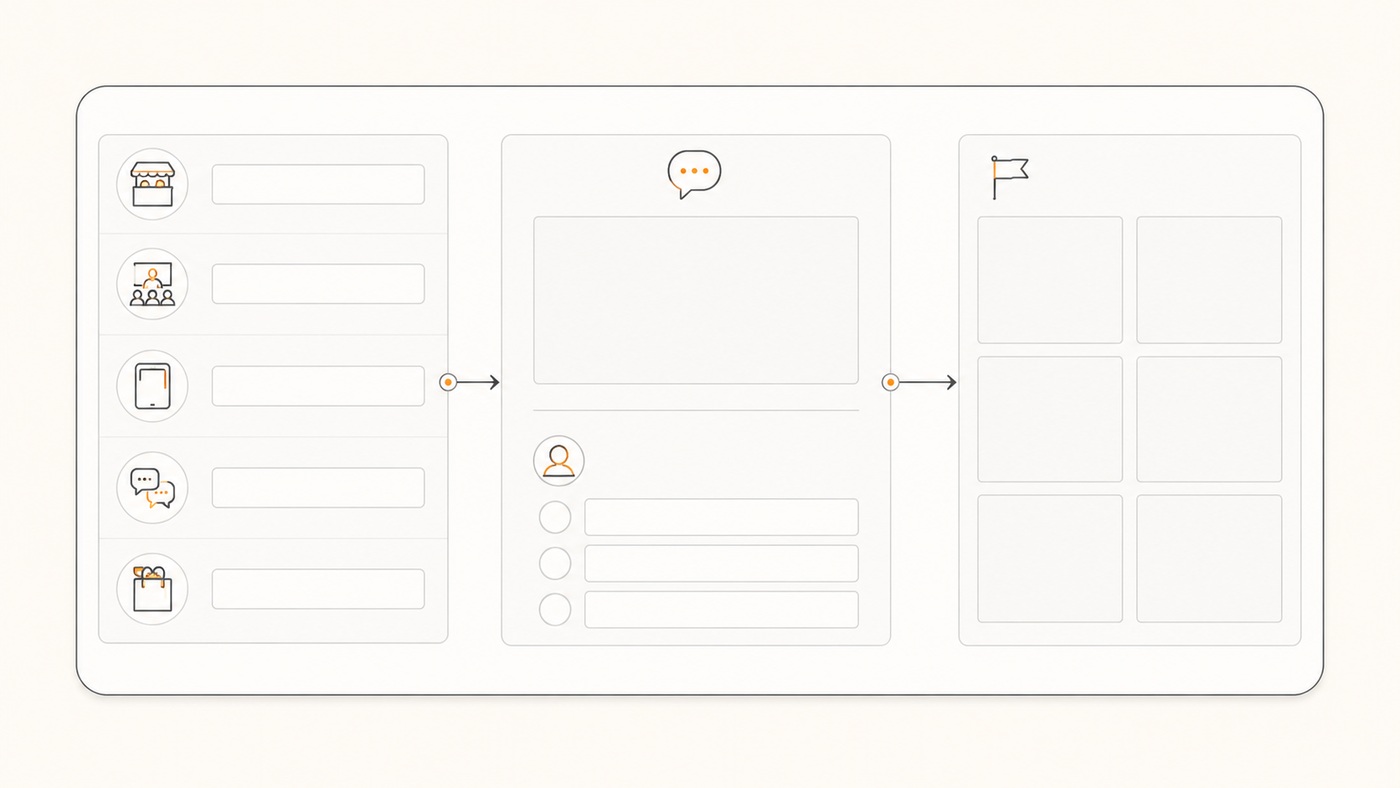
The working table should retain the source creator or content, the action taken, the owner and the next step. Marketing reads the content contribution; sales reads the need and timing; IMVN reads whether each creator is performing the agreed role. One table does not require every team to use the same metric.
Marketing needs source, activity and content; sales needs owner, need, expected value and next step. A shared table can contain both with clear permissions. The 72-hour follow-up workflow provides the update rhythm so data does not stop at an event report.
| Layer | Example measure | Management question |
|---|---|---|
| Reach | Invitations, responses, traffic | Did the right group know and attend? |
| Participation | Demo, Q&A, livestream, material | What did they do with the product or information? |
| Signal | Sample, certification, quote, deeper demo | Which need or obstacle became visible? |
| Opportunity | Sales acceptance, next meeting, owner | Who acts and by when? |
Keep attribution limits and the path of every opportunity
A sales opportunity rarely comes from one creator post or one booth visit alone. Content may create attention, an expert may reduce uncertainty and a meeting may confirm the next step. The report should record the contribution of each touchpoint instead of claiming that either the creator or the trade show generated all revenue.
IMVN can define measurement roles in the brief, assign sources to creator content, track signals and connect the data with the 72-hour post-show process. Sales remains responsible for confirming the opportunity, expected value and commercial result.
An opportunity may also reflect an existing relationship, distributor activity, industry content, price and budget timing. The show may create, accelerate or validate a step without being the sole source. State the event’s role and what remains uncertain instead of claiming direct revenue during a long buying cycle.
Before approving the dashboard, marketing and sales should agree the definitions of a contact, qualified conversation and sales-accepted opportunity. IMVN can help the brand define the measurement role of each creator, standardise content sources, identify the signals to retain and hand the data to sales after the event.
A summary of totals cannot explain where an opportunity came from. Connect each sample request, meeting or quotation enquiry to its pre-show invitation, booth activity, livestream or later follow-up content. The purpose is not to give all credit to one touchpoint, but to see which touchpoint helped the opportunity advance.
When several people from the same company participate, group them at account level while retaining each person’s role. A technical user, buyer and distributor may provide different signals. The shared marketing and sales report must preserve those differences, or rich conversations will collapse into a single line of booth traffic.
Planning a similar creator campaign?
Share your market, category and objective. IMVN will respond with practical recommendations for the next step.
Request campaign advice →