A conventional livestream starts with remote viewers. A trade show livestream adds a real product, visitors, on-floor experts and reactions that cannot be recreated completely in a studio. Its value depends on how the creator turns those elements into content viewers can understand and questions that sales can continue to handle.
Within the international trade show influencer marketing system, IMVN is not the broadcast equipment supplier. The agency selects the right creator or host and expert, builds the brief for two buyer audiences, adapts the script for the market, controls approved statements, organises usage rights and routes questions to the responsible team.
Marketers should therefore evaluate the livestream as influencer marketing with commercial touchpoints, not as entertainment designed only to increase booth views.
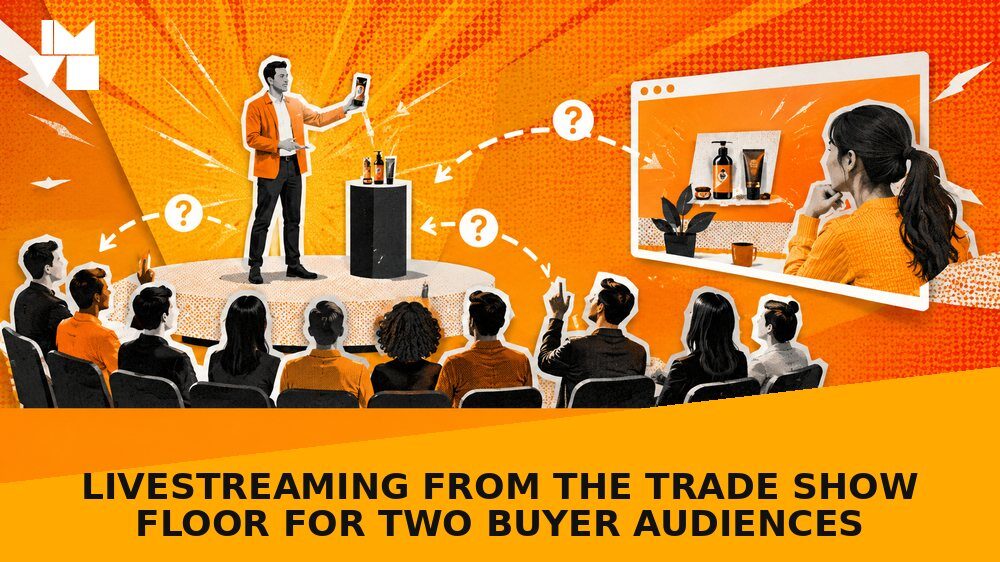
A conventional livestream starts with an online audience. A trade show floor adds visitors standing beside the product, specialists available in person and visible customer reactions. Operated well, one demonstration can serve people in the venue, remote viewers and the sales team that needs structured follow-up data.
This is more than placing a phone in front of a booth. The session must sit inside an international trade show operating system with one approved product source, defined roles and a route from questions to commercial action.
The creator must serve two buyer audiences at once
A suitable creator needs more than fluency on camera. They must know which question should appear early so remote viewers can follow, which question belongs with the expert, and when attention needs to return to the product. In B2B or categories that require explanation, specialist credibility and the ability to ask useful questions often matter more than follower count.
On-floor visitors have chosen to attend an industry event, can see the product and can ask in person. Online viewers can leave quickly, need fast context and cannot touch the product. The run of show must provide depth for the room while telling remote viewers what is happening, which problem the product addresses and what they can do next.
Lock one brief, one information source and clear roles
The livestream brief should separate the content objective from the commercial objective. The content may need to explain an application, compare two options or resolve a concern. The commercial objective may be a qualified question, demo registration, sample request or agreement to meet a distributor. A broad instruction to increase engagement gives the creator no useful destination for the audience.
Features, price, offer terms, order conditions and claims should come from the same approved document. The two spaces are the floor and the livestream. The three feedback routes are in-person questions, online comments and sales notes after a conversation. Each route needs an owner, minimum identity fields and a response deadline.
The host controls pace, repeats questions and connects both audiences. The expert handles points that require specialist credibility. The product team prepares demonstrations, protects approved information and owns unresolved questions. Sales identifies buying signals and agrees the next step instead of entering every segment. The guide to trade-show activations built around product experience shows how these roles work around a meaningful visitor action.
Use the creator to turn demonstrations into answers to real questions
A strong run of show leaves room for the creator to listen and respond. Approved product information, required actions and the call to action remain fixed; questions from the floor and remote viewers create the flexible portion. Any unanswered question should be marked for follow-up instead of pushing the creator or expert beyond the approved scope.
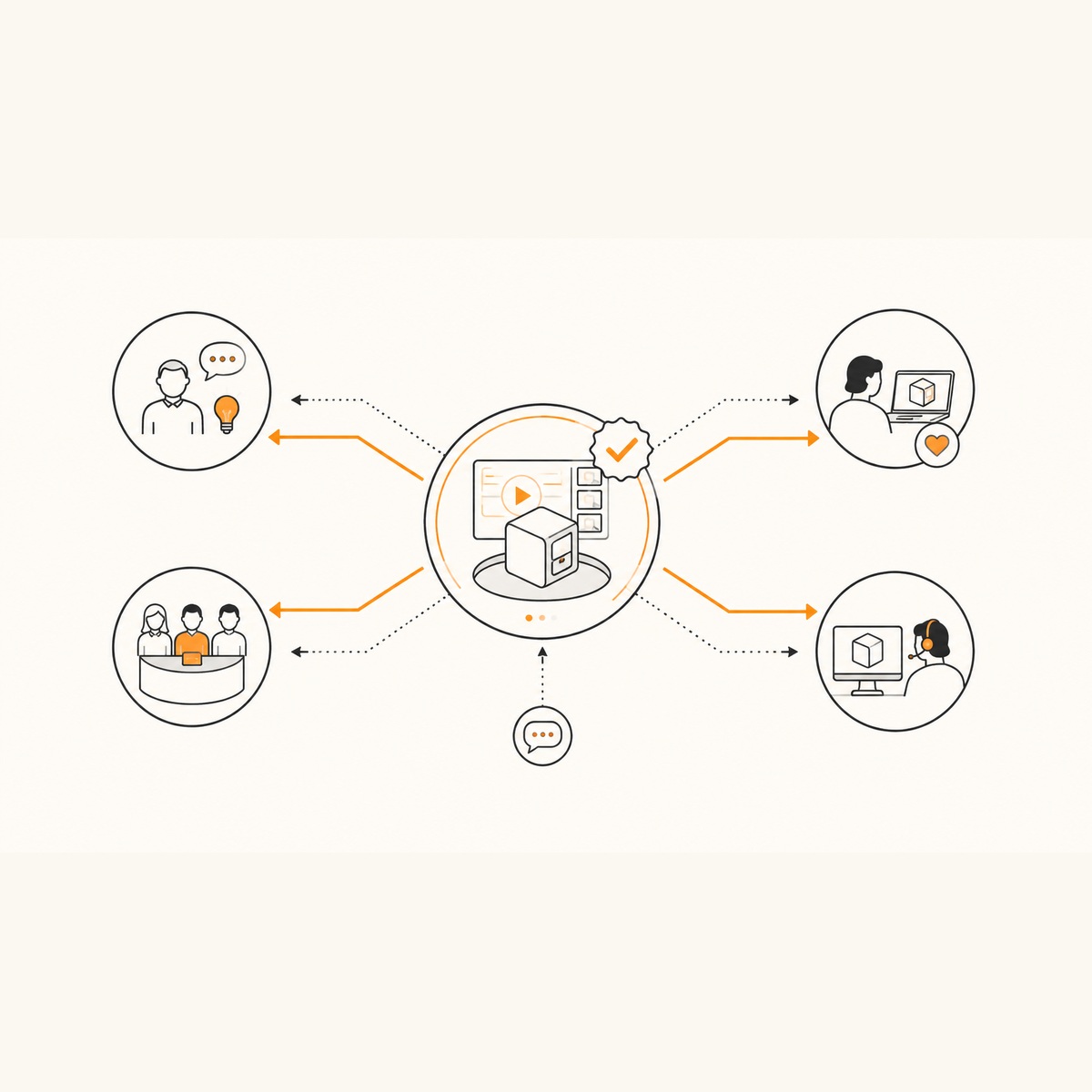
If visitors at the venue should try the product, the livestream can connect to a creator-led product activation. The camera then records how people use the product, where they struggle and which questions emerge from the experience, not only what happens on the stage.
A useful demonstration does not recite features. The host states the buyer problem, the expert or product specialist performs the action, and the audience sees the criteria for judging the result. New questions can shape the next demonstration when they remain within approved claims and the run of show, gradually building a market-specific question library.
Read on-floor material through an influencer marketing lens
The two field examples below are not evidence that a crowd creates results by itself. They show how a creator can use category context to make questions more credible and move viewers into a product action. Marketers should ask what the creator helped the audience understand, which content can be distributed again and which signals remain for sales.
IMVN-supplied material places the livestream inside a mother-and-baby trade show, where the product, creator or host, experts and visitors share one context. The crowd only matters when the creator uses the floor to ask category-specific questions, brings the expert in at the right point and lets viewers see the product being experienced by people with a genuine interest.
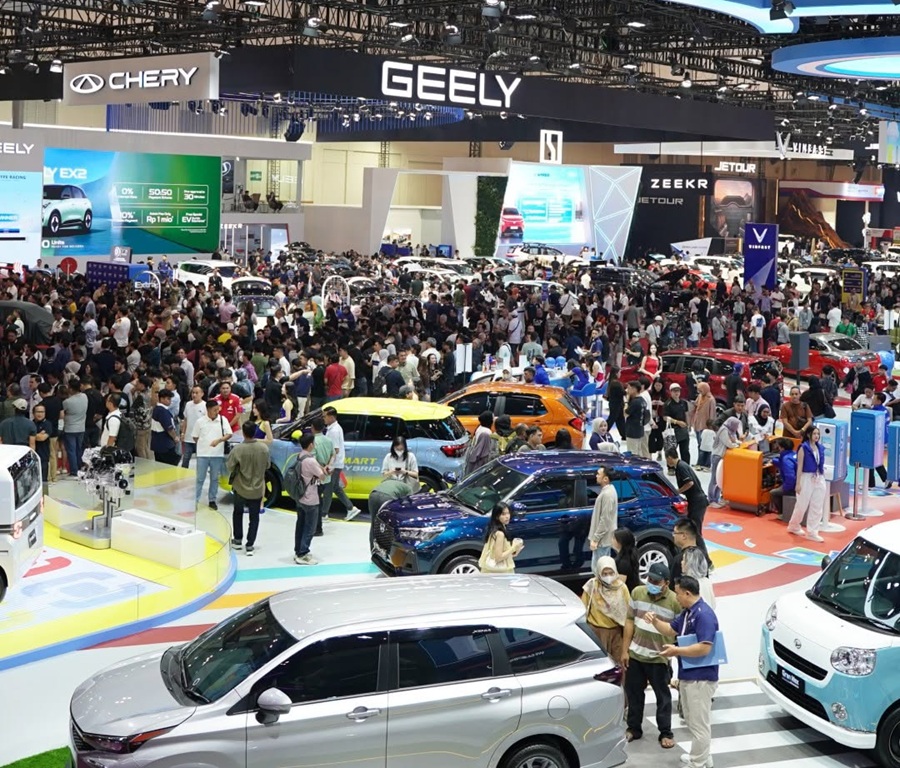
The Indonesian automotive material uses another mechanism: the activation moves spectators into participation, then lets the creator ask product questions around that action. The livestream does not need to close a sale immediately. Its value lies in showing a real experience, explaining the evaluation criteria and giving viewers a clear route to request more information or register for the next step.
Turn questions into demand data and a sales next step
IMVN can connect each question with the creator, product, audience group and agreed next step. That data shows which creators prompt specialist questions, which topics need more content and which livestreams produce registrations or meetings. The guide to measuring influencer marketing at trade shows separates these signal layers.
If floor visitors hear one offer while online viewers see another condition, the team creates confusion and possible disputes. The run sheet should state eligibility, period, quantity, market and approval owner. Mark an uncertain answer for verification instead of allowing the host to improvise for pace.
Tag each question by need, obstacle, buyer role and source. A distributor asking about certification is different from a consumer asking how to use the product. At scale, the data shows which sales materials need revision, which issue requires expert explanation and where the product may not yet fit the market.
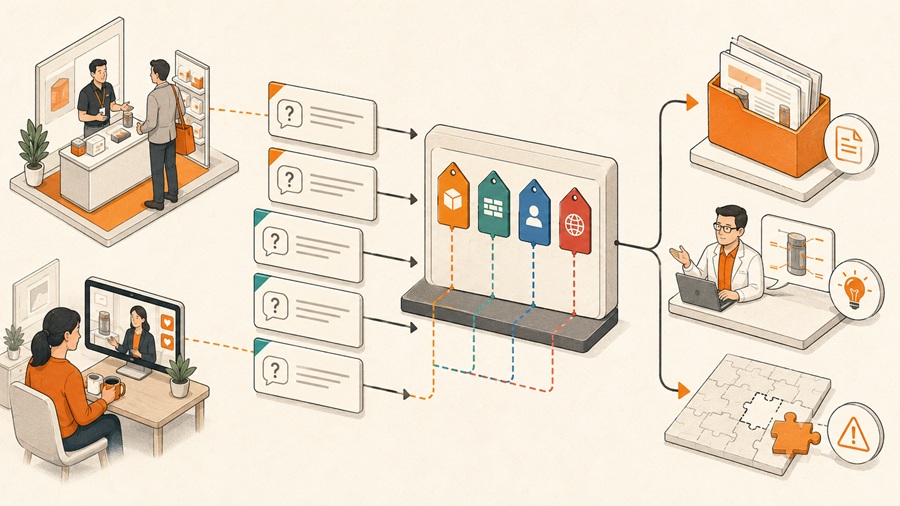
Views show whether the session was distributed; they do not create an opportunity by themselves. Define progression signals such as a specific question, company details, a sample request, a demo registration or consent to speak with a distributor. The framework for measuring trade show performance from touchpoints to opportunities tracks these signals.
Know when a livestream is worth producing and when to stop
A livestream is worth producing when the creator has a clear product story, the expert is ready to answer, recording and distribution rights are agreed, connectivity is stable and sales knows where the signals will arrive. If one of those conditions is missing, edited content may be safer and more useful.
Do not livestream when product files are incomplete, the demonstration creates a safety risk, offer terms are unsettled, the expert lacks permission to speak or venue connectivity is unreliable. In a long B2B purchase process, collecting questions and booking meetings may be the right outcome. If no next action can be defined, edited post-show content may work better than a live broadcast.
Run the entire flow for 20–30 minutes before going live: floor question, online comment, demonstration, offer terms, data handoff and an unresolved answer. IMVN can select and book the creator and expert, build the brief, adapt the script, control approved information, agree usage rights and coordinate the question handoff to sales in the target market.
If every minute is scripted, the host must either ignore questions from the floor or let the livestream run beyond control. Mark the mandatory segments, the sections that can expand or contract and the time reserved for questions. The product team can prepare answer categories without pretending that every issue is predictable.
Record unanswered questions with the product name, the questioner’s role and a follow-up channel. After the broadcast, use the same list to update the FAQ, send promised answers and select the next content topics. The livestream then leaves useful data for the sales and product teams instead of ending when the camera stops.
Planning a similar creator campaign?
Share your market, category and objective. IMVN will respond with practical recommendations for the next step.
Request campaign advice →