A company cannot control everyone who walks past its booth, but it can give important buyers a reason to pay attention and book before opening day. Creators make this different from a routine event invitation: they place the product in the right community context, ask the questions buyers care about and show why the booth meeting deserves time.
This article covers T–30 through opening day within the trade show influencer marketing series. IMVN focuses on identifying the right groups, choosing creators or experts with a real role, adapting the content sequence for the market and turning responses into meetings that sales can use.
An exhibitor cannot control everyone who walks past the booth, but it can secure most priority meetings before opening day. Relying entirely on natural footfall forces sales to qualify people during the busiest period and increases the chance of missing valuable conversations.
This guide covers T–30 to opening day inside the international trade show operating system. The target is enough confirmed meetings with people who have a clear market role.
Start with the people to meet and the action to create
The target list also needs an influence source. Who makes this group pay attention, who can make a credible introduction, and who can explain the issue in language the audience trusts? The answer may be a specialist creator, experienced user, distributor, trade publication or technical expert. IMVN uses this layer to choose the right voice instead of buying reach alone.
The organiser optimises event scale and variety; the exhibitor must optimise conversations relevant to its product and market-entry stage. Separate buyers, distributors, experts, trade media, service partners and general visitors. Each group needs a different meeting proposition and owner.
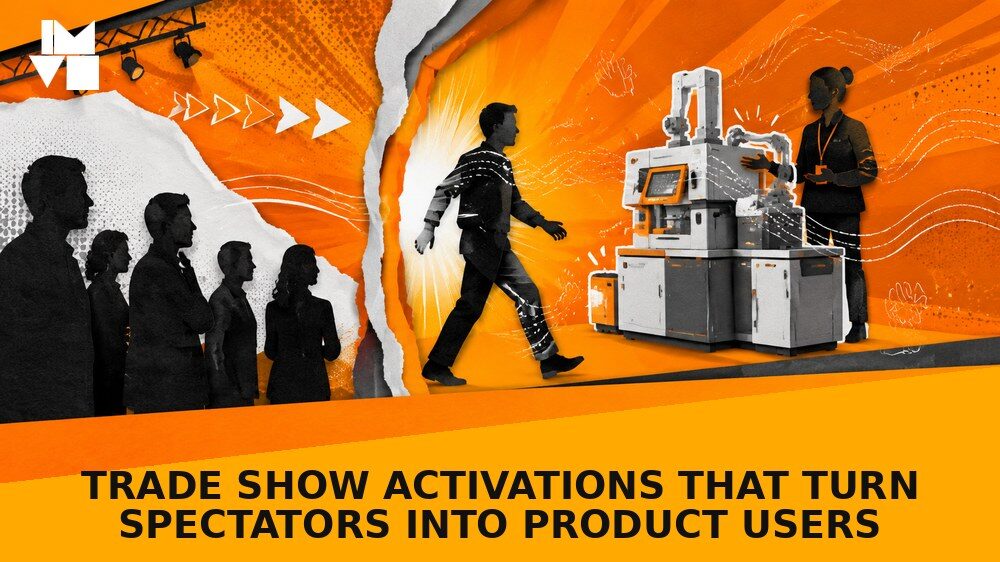
Do not start with a long name list. Record the role, problem and desired action after the meeting: see a demo, request a sample, review product files, introduce a partner or discuss distribution terms. The guide to product-led trade-show activations helps turn those group needs into a booth action worth putting in the invitation.
Define the reason to meet before selecting the creator
A creator can create demand only when the invitation offers specific value. They may introduce a demonstration, gather questions for the expert or show a use case, but they should not have to exaggerate a booth with nothing worth seeing. The brand should define the meeting reason, approved information and next step before writing the creator brief.
A booth number is not a meeting proposition. A useful invitation states what the recipient will see, who they will meet, how long it takes and which material or decision they leave with. The reason may be a private demo, short expert Q&A, product reveal, application comparison or market-standard discussion.
Build the creator content sequence from T–30 to opening day
Not every touchpoint needs a different creator. One suitable person may open the problem at T–30, show the preparation or explain the application at T–14, and remind the audience at T–7. Another programme may use an expert for technical content and a creator for the product experience. Roles should shape the mix, not a desire to make the posting calendar look busy.
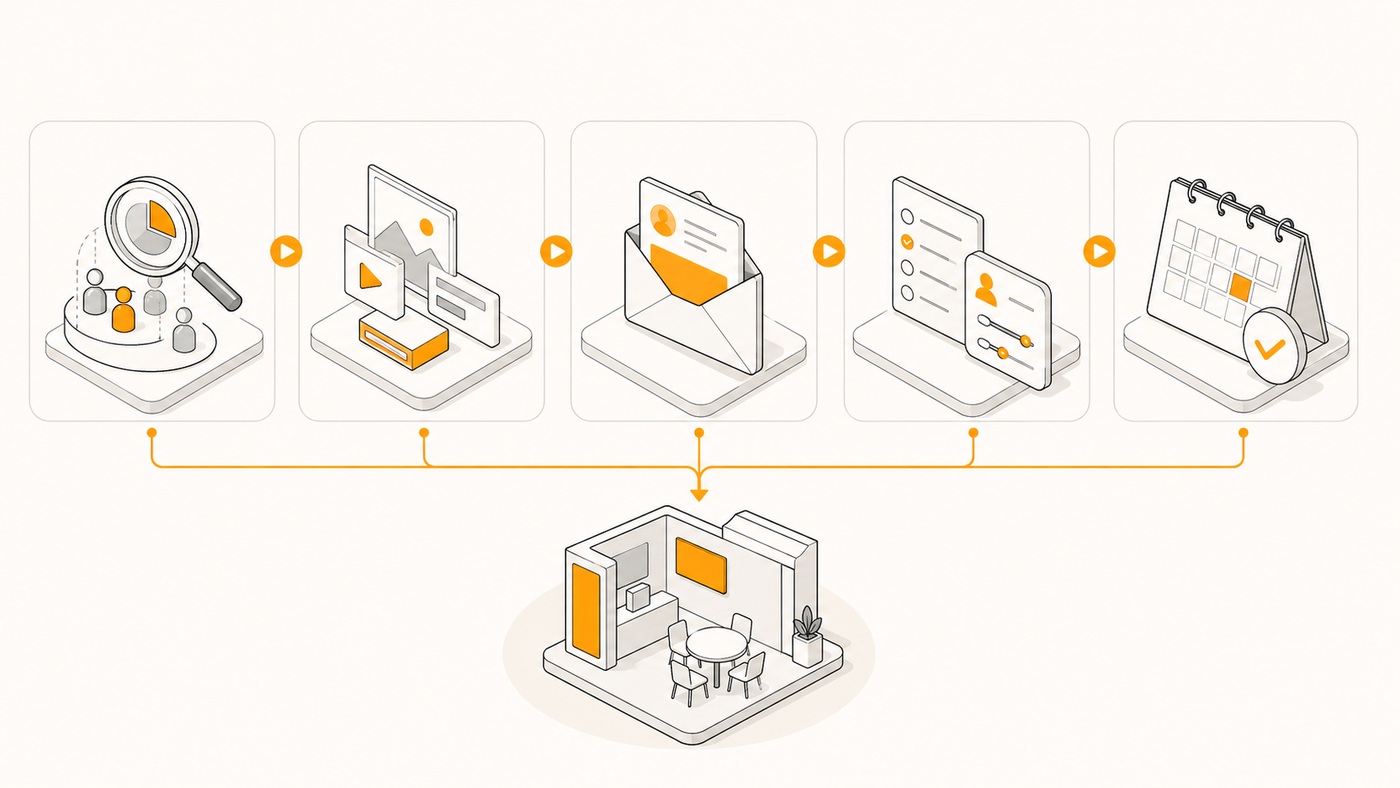
At T–30, introduce the problem and value brought to the show. At T–21, present the people and specialist topic. At T–14, preview the demo or material. At T–7, show remaining meeting windows. At T–2, confirm location, time and contact. The sequence does not need high volume; each touchpoint should answer one concern and lead to booking.
Choose creators and experts by their role in the buying decision
For a cross-border project, IMVN also needs to check whether the creator is genuinely trusted in the target market’s category, which languages they can work in, whether they conflict with a competitor and whether they can join content both before and during the show. A booking that appears on stage for a few minutes cannot replace the content sequence required beforehand.
The invitation must be adapted to the creator and the recipient group. The same demonstration means standards and evaluation criteria to a technical buyer, channel context to a distributor, and a news angle plus an approved spokesperson to trade media. Translating one post word for word does not create that fit.
A suitable expert can make the meeting worth the time, but should not be a decorative name. The expert explains specialist points, the distributor provides a channel view and the host keeps the exchange on time. The invitation should state each role and speaking boundary so the recipient has the right expectation.
Correct translation is not enough. Adjust address, directness, evidence, time format, units and common objections for the destination market. A technical buyer invitation should lead with standards and the demonstration; a trade-media invitation needs a news angle and an authorised spokesperson.
Turn content responses into meetings that sales can handle
Every response needs a clear transfer route: who asked, which creator or content brought them, which product interests them, whom they want to meet and which time works. If the creator receives a private message, the handoff and consent to share information must be agreed in advance; an opportunity should not remain in the creator’s inbox.
Do not fill every slot when only two people can handle a detailed conversation. Leave buffers for notes, early or late visitors and expert handoffs. Every meeting record should include name, role, expected need, required material, participants and desired next step.
Do not use total registrations as the primary measure. Track correctly targeted invitations, response rate, confirmed meetings, attendance, meetings with the intended role and agreed next steps. After the show, move those conversations into the 72-hour follow-up workflow instead of sending one generic thank-you email.
Before sending the first invitation, marketing and sales should approve a short list of target groups, meeting reasons and desired actions. IMVN can select and book creators or experts, build the brief, adapt invitations, track content responses and transfer meetings with sufficient context to sales in the target market.
A qualified meeting is a commitment from both sides
IMVN can select and book creators or experts, build the brief, adapt the content sequence and connect responses with meetings. Sales still needs to prepare the right person, material and decision authority. After the show, those meetings should enter the 72-hour follow-up process before the context created by the content is lost.
A meeting has value only when the exhibitor brings the right person and material too. A technical buyer should not arrive to find only a communications representative, and a distributor asking about commercial terms needs someone authorised to discuss them. Poor preparation turns a strong pre-show invitation into a loss of credibility.
Before opening day, every booking should have an objective, owner, working language, duration and expected next step. If the schedule changes, notify the visitor early and offer an alternative. This makes the meeting count a measure of company readiness, not simply the volume of invitations sent.
Planning a similar creator campaign?
Share your market, category and objective. IMVN will respond with practical recommendations for the next step.
Request campaign advice →